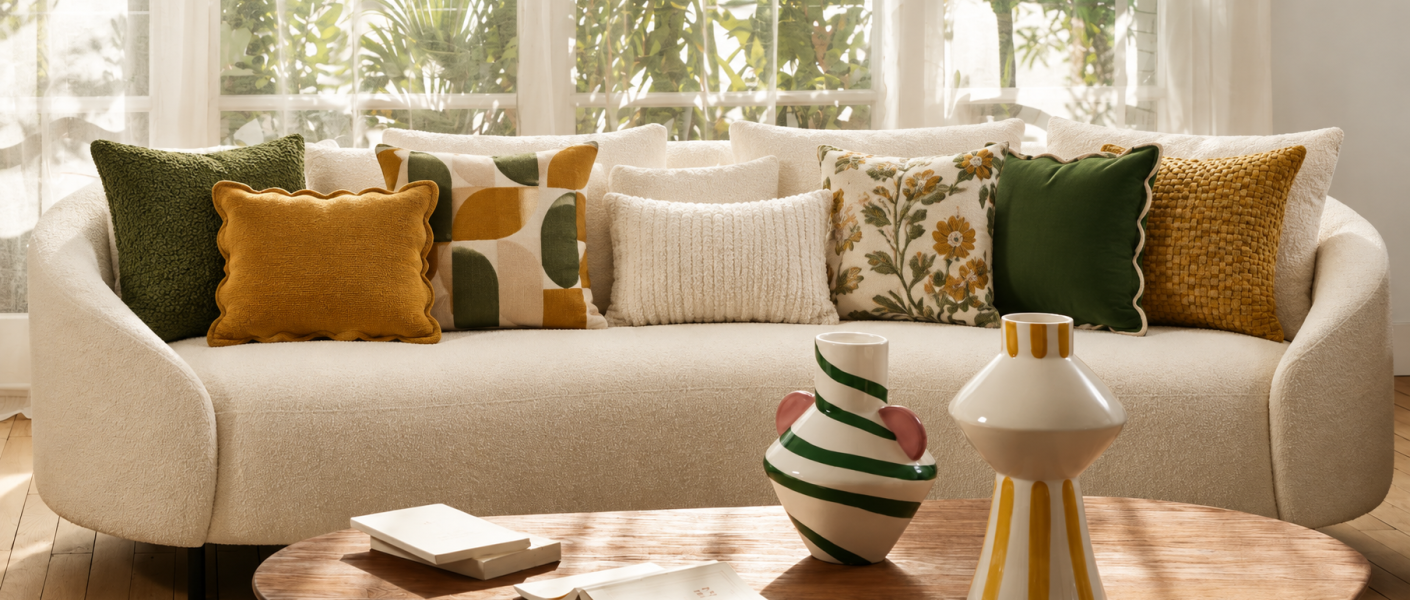
A few well-chosen throw pillows can completely transform the look and feel of a living room. The key is to coordinate colors, sizes, patterns, and textures in a way that feels layered and inviting without sacrificing comfort.
To mix and match throw pillows successfully, start by looking at the colors already present in your space, including your sofa, rug, curtains, and walls. Choose two or three coordinating colors, vary the pillow sizes and shapes, and combine different textures. These simple principles make it easier to personalize your living room while maintaining a cohesive overall look.
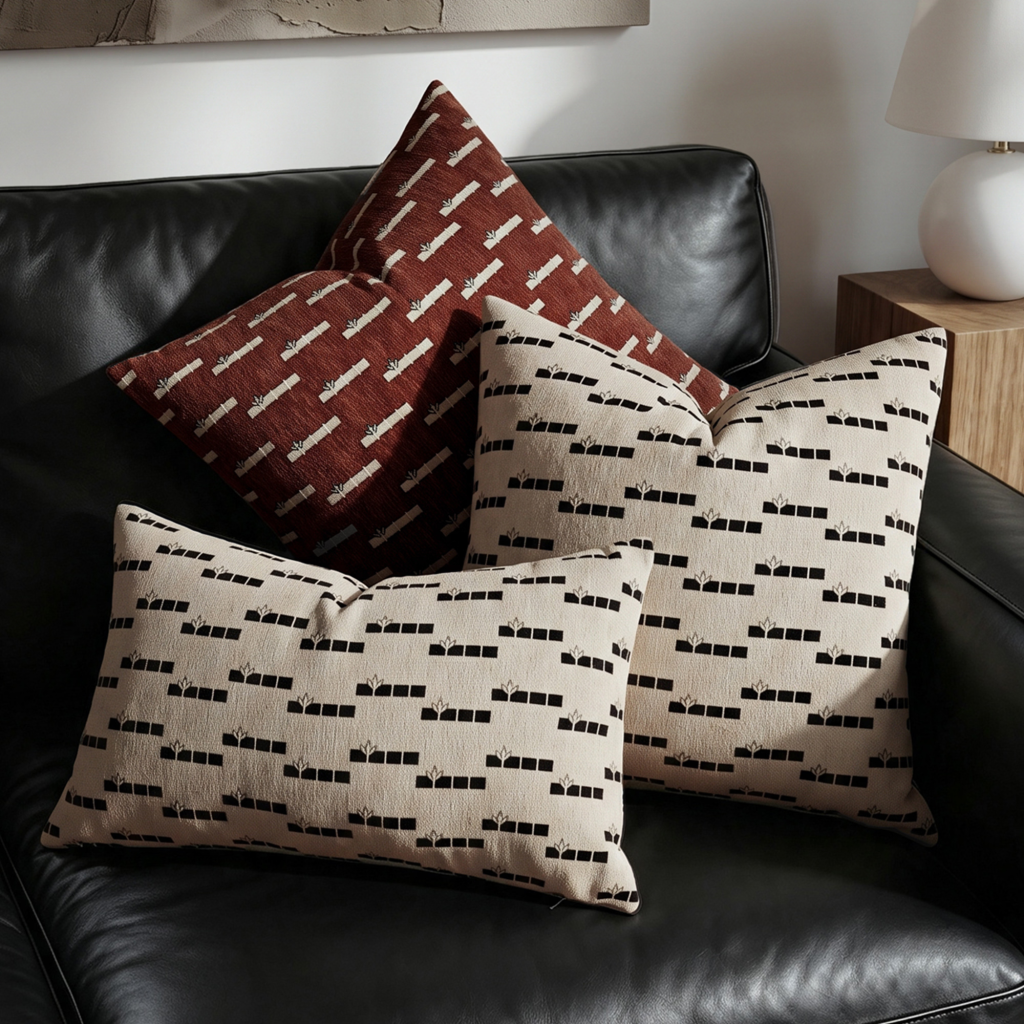
Understanding the Basics: Color and Atmosphere
Choose a Cohesive Color Palette
Throw pillows are one of the easiest ways to introduce color into a living room because they can be changed more easily than larger pieces of furniture or decor.
You do not need to find exactly the same shade for every pillow. What matters more is choosing a consistent color palette and staying within it.
Before selecting your throw pillows, look at the colors already present in the room:
- The sofa
- The walls
- The area rug
- The curtains
- Other major decorative elements
From there, choose two or three complementary or analogous colors that work naturally with the existing decor.
Tonal Palettes and Soft Color Schemes
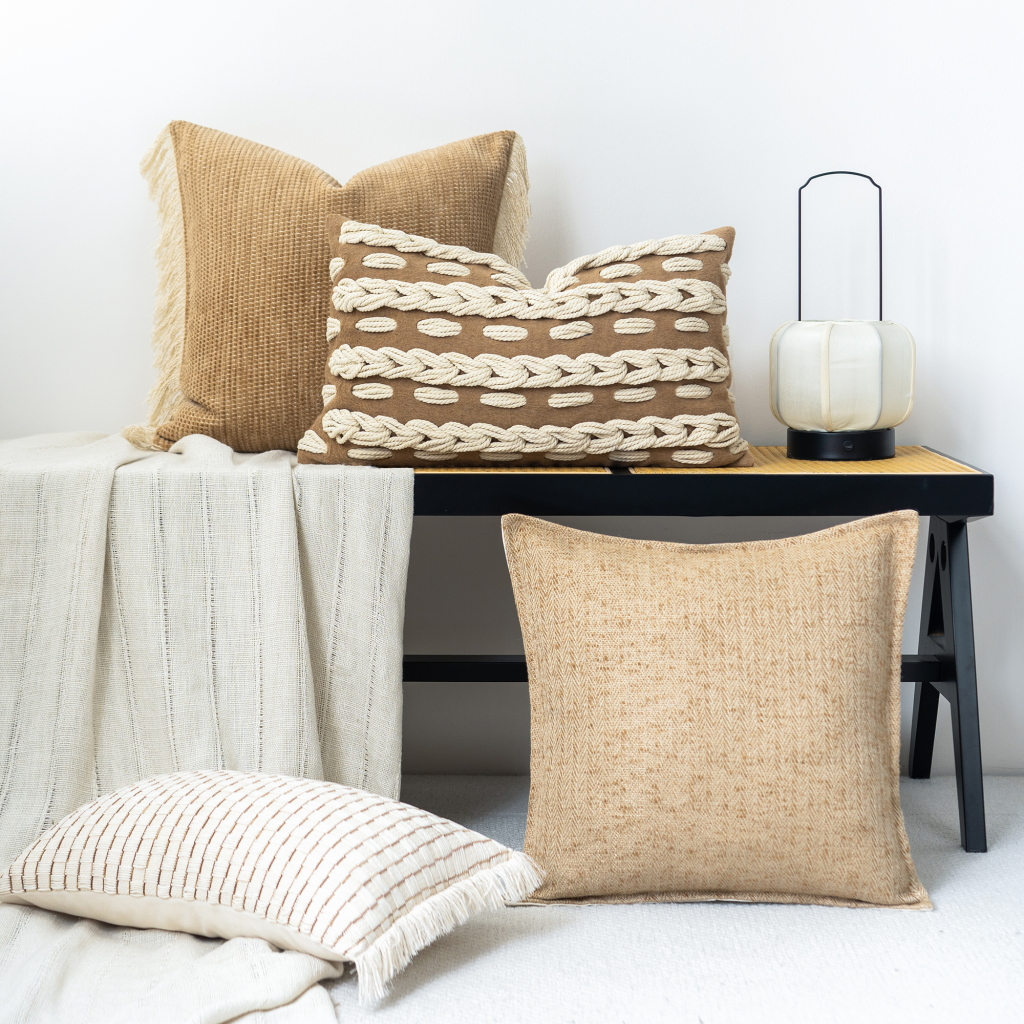
A monochromatic or tonal palette creates a calm, refined atmosphere. Instead of using one identical color throughout the room, work with several shades from the same color family.
For example, combining ivory, sand, beige, taupe, and warm brown can create depth without making the room feel visually busy.
The same principle works with blue. Pale blue, dusty blue, navy, and blue-gray can all be layered together while maintaining a sense of continuity.
Controlled Contrast
If your living room is mostly neutral, contrasting throw pillows can make the space feel more dynamic.
Try pairing two colors that sit opposite one another on the color wheel, such as terracotta and peacock blue.
Another useful decorating principle is the 60/30/10 rule:
- 60% dominant color
- 30% secondary color
- 10% accent color
The proportions do not need to be mathematically exact. The idea is simply to allow one color to lead, another to support it, and a third to provide contrast.
Consider the Psychological Effect of Color
Color also affects the atmosphere of a room.
Warm shades such as red, orange, terracotta, ochre, and yellow can make a living room feel warmer and more energetic.
Cool colors such as blue, green, and violet tend to create a calmer atmosphere and can visually make a space feel more open.
Neutral shades such as beige, gray, cream, and white bring balance and can serve as a visual thread connecting more expressive colors and patterns.
How Many Throw Pillows Should You Put on a Sofa?
A sofa often looks more relaxed and visually balanced when throw pillows are arranged in odd numbers.
For a standard three-seat sofa, three or five pillows are usually enough.
The idea is to alternate sizes and proportions rather than using identical pillows across the entire sofa.
You might place one or two large 19″L x 19″W square pillows near the corners, use 17″L x 17″W square pillows to build the middle layer, and finish the arrangement with an 11″L x 19″W rectangular lumbar pillow.
The most important consideration is comfort. Decorative pillows should enhance the sofa rather than take over the entire seating area.
Mix Different Shapes and Sizes
Combining different pillow sizes and proportions can soften the straight architectural lines of a sofa.
Square pillows create structure and are easy to layer, while rectangular lumbar pillows introduce a different proportion and can provide useful lower-back support. Round or bolster pillows can also introduce softer, more organic lines when you want to break up an arrangement dominated by square shapes.
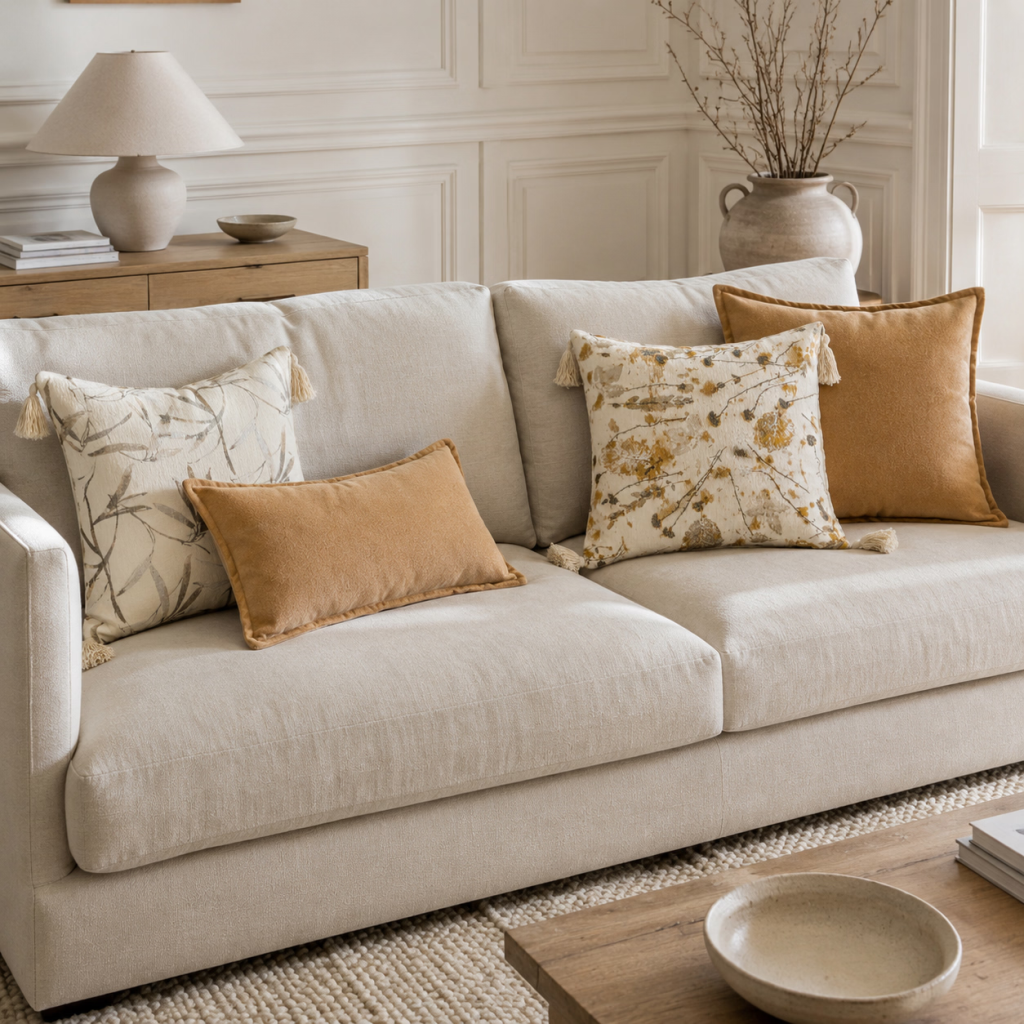
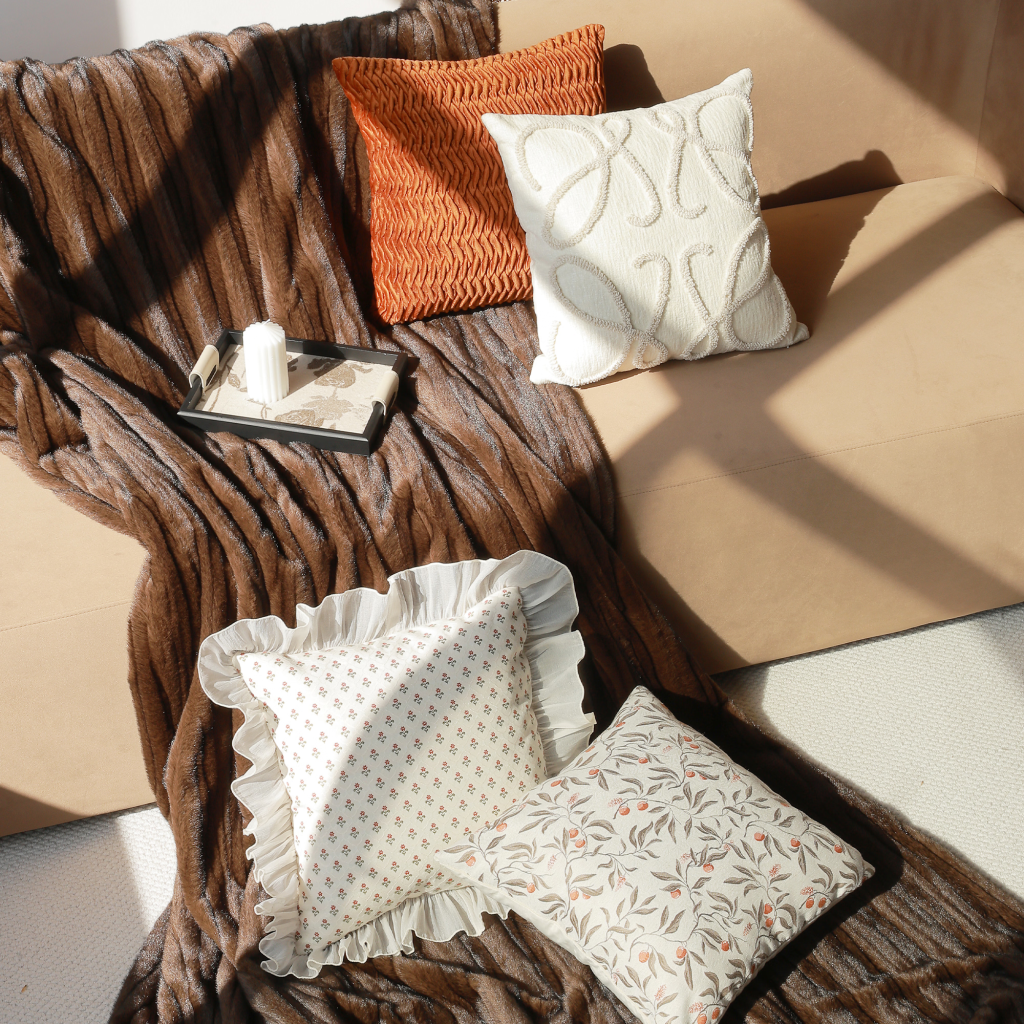
Try varying the dimensions throughout the arrangement:
- A 19″L x 19″W square pillow creates a strong visual anchor and works well at the back or near the corners of the sofa.
- A 17″L x 17″W square pillow adds a slightly smaller middle layer.
- An 11″L x 19″W rectangular pillow introduces contrast in shape and works well at the front or center of the arrangement.
- A round or bolster pillow can soften a composition dominated by straight lines and square forms.
Using several proportions creates depth and makes the sofa look more naturally styled.
How to Mix Pillow Patterns and Textures
Patterns: Create Visual Rhythm
Mixing solid throw pillows with one or two patterned pillows can give a sofa more character without making the overall composition feel cluttered.
A good starting point is to select one dominant pattern, such as floral, geometric, striped, or ethnic-inspired, and then choose solid pillows that repeat colors found in that pattern.
A composition of approximately 70% patterned pillows and 30% solid pillows can create a lively yet coordinated look when you want pattern to play a major role in the room.
You can also combine several different prints, such as florals, stripes, and geometric motifs, as long as they share a consistent color palette.
The patterns do not need to match perfectly. A shared color story is usually enough to tie different designs together.
Easy Pillow Pattern Combinations
Stripes + Floral + Solid
A striped pillow creates rhythm, a floral pillow introduces softness and a romantic touch, and a solid pillow repeats one of the main colors to visually connect the arrangement.
Graphic Pattern + Texture + Neutral Solid
Pair a black-and-white graphic pillow with a woven, jacquard, or embroidered pillow, then add a solid beige, cream, or gray pillow to create balance.
Ethnic-Inspired Pattern + Velvet
A colorful tribal or ethnic-inspired motif can be balanced with a solid ribbed or plain velvet pillow for a relaxed bohemian look with a more polished finish.
Textures: Layer Different Materials
Throw pillows are also an easy way to introduce different textures into a living room.
Combining materials with different surfaces adds dimension and makes the room feel warmer and more inviting.
| Material | Look and Feel | How to Use It |
|---|---|---|
| Linen | Natural, matte appearance with visible fibers and a light feel | Ideal for Scandinavian, relaxed, or minimalist interiors. Pair with velvet for a more refined contrast. |
| Corduroy Velvet | Soft, warm texture with subtle changes in sheen depending on the direction of the fabric | Creates a cozy, luxurious atmosphere. Combine with graphic patterns or linen to keep the overall look balanced. |
| Boucle Wool / Faux Fur | Soft, fluffy, cocooning texture | Ideal for fall and winter or mountain-inspired interiors. Combine with smoother fabrics for contrast. |
| Heavy Cotton | Versatile, durable fabric with a comfortable, natural feel | Suitable for everyday use and works particularly well in solid colors or subtle stripes. |
| Microfiber | Soft synthetic fabric with a suede-like finish and good resistance to wear and light | A practical option that is generally easy to maintain and works well for everyday living spaces. |
For a harmonious arrangement, try limiting your sofa to two or three main textures.
Combine one highly textured material, such as boucle or embroidery, with smoother fabrics such as linen or cotton.
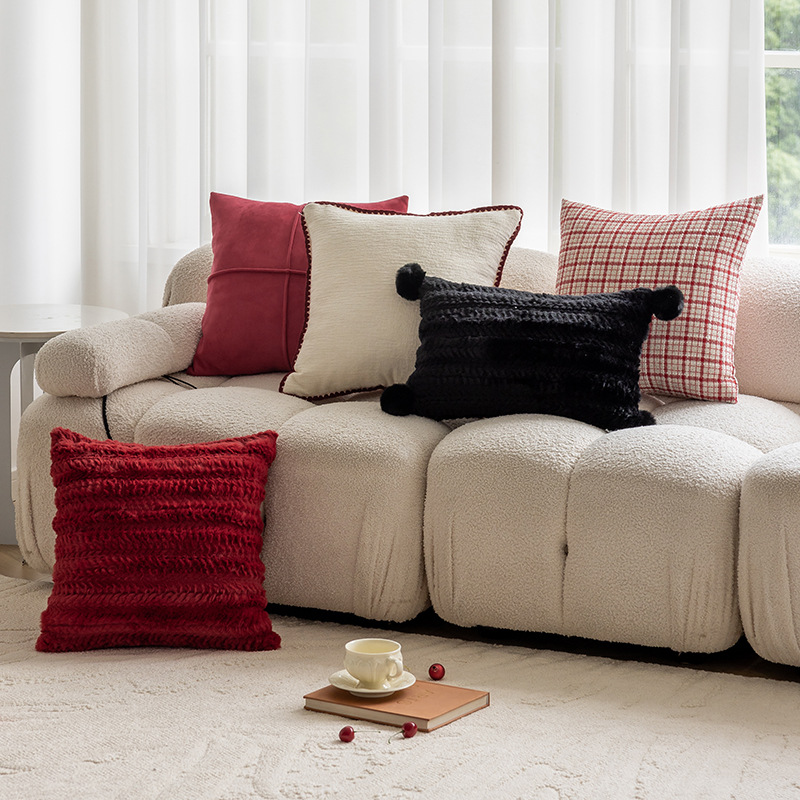
Seasonality can also guide your choices. In fall and winter, bring in warmer textures such as velvet, wool, boucle, or faux fur. In spring and summer, lighter textiles such as linen and lightweight cotton can make the room feel fresher.
How to Arrange Throw Pillows on a Sofa
A Step-by-Step Method
1. Consider How the Living Room Is Used
Start by thinking about the purpose of the room, the number of people who regularly use the sofa, the decorating style, and the level of comfort you need.
A family-room sofa should prioritize comfortable, durable pillows that can withstand frequent use.
A more formal living room can accommodate decorative fabrics, special shapes, embroidery, or more elaborate patterns.
2. Identify the Dominant Color
Look at the main color of the sofa, rug, or another large element in the room.
You can build a tonal palette around this color or introduce a complementary shade depending on whether you want the room to feel calm or more energetic.
3. Choose Two or Three Pillow Sizes
Mix different proportions instead of using identical pillows throughout the sofa.
A versatile combination can include:
- 19″L x 19″W square pillows
- 17″L x 17″W square pillows
- 11″L x 19″W rectangular lumbar pillows
Using two square sizes together with a rectangular pillow creates enough variation without making the arrangement feel overly complicated.
If you want to introduce an additional shape, a round or bolster pillow can also help soften the straight lines of the sofa.
4. Choose and Layer Patterns
Start with one dominant pattern, whether geometric, floral, striped, or ethnic-inspired.
Then select coordinating patterns or solid pillows that repeat colors from the main design.
If you want a pattern-rich arrangement, a ratio of around 70% patterned pillows to 30% solid pillows can provide a useful starting point.
5. Mix Different Textures
Alternate warmer materials such as velvet and boucle with lighter or smoother fabrics such as linen and cotton.
The goal is to create contrast while keeping the colors visually connected.
6. Arrange the Pillows from Largest to Smallest
Begin with the largest 19″L x 19″W pillows at each end of the sofa.
Place 17″L x 17″W pillows slightly inward, then layer an 11″L x 19″W rectangular pillow in front or at the center.
The final arrangement should still be functional. As a general guide, try to keep around one-third of the sofa available for comfortable seating instead of covering the entire surface with decorative pillows.
Example: How to Style Throw Pillows on a Gray Sofa
A gray sofa provides a versatile neutral base, making it easy to experiment with stronger accent colors.
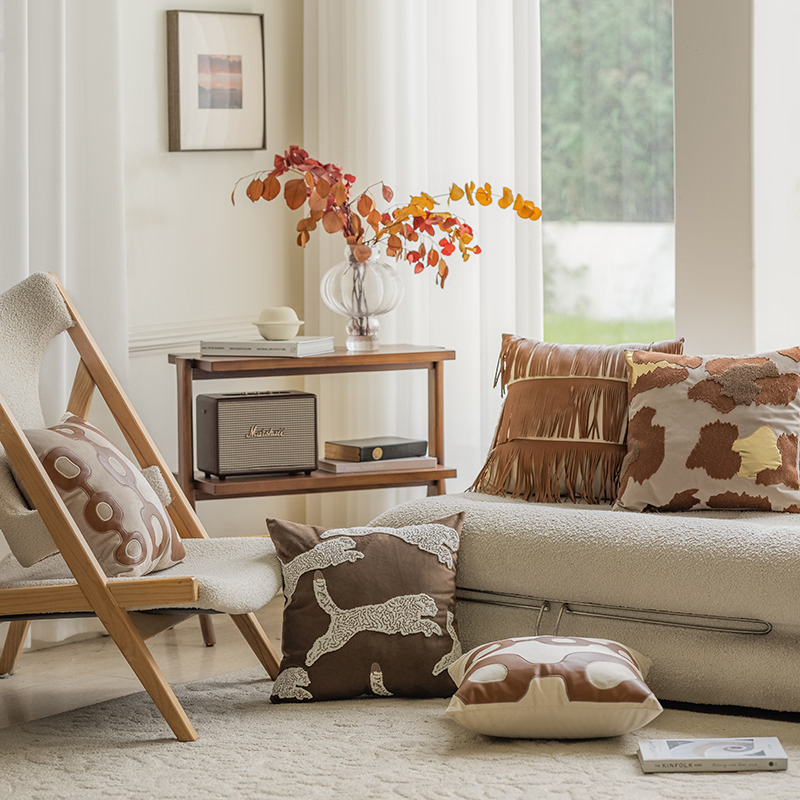
Color Palette
Start with:
- Light gray as the sofa color
- Teal or peacock blue
- Terracotta
- Cream as a soft neutral accent
Pillow Sizes and Textures
One possible five-pillow arrangement could include:
- Two 19″L x 19″W teal velvet pillows
- Two 17″L x 17″W terracotta linen pillows
- One 11″L x 19″W gray-and-white jacquard lumbar pillow
This five-pillow arrangement keeps the larger pillows toward the back, introduces a slightly smaller square size for depth, and uses the rectangular lumbar pillow as a focal point at the front or center.
The combination of velvet, linen, and jacquard also creates visual and tactile contrast without making the sofa feel overcrowded.
Patterns
Use the jacquard pillow as the patterned element.
A geometric design that includes or visually complements the blue and terracotta tones can help connect the different colors.
The solid pillows then repeat the key colors, while the combination of velvet, linen, and jacquard creates visual and tactile contrast.
This layered approach keeps the sofa interesting without making the arrangement feel random.
Practical Tips for Choosing Throw Pillows
Choose Removable Pillow Covers
Whenever possible, choose throw pillows with removable covers.
Removable pillow covers are easier to wash, replace, and change with the seasons.
Cotton and linen covers can often be machine washed according to their care label, while velvet and microfiber may require a delicate cycle or professional cleaning depending on the fabric construction.
Rotate and fluff your pillows regularly to help prevent the filling from becoming compressed on one side.
Choose the Right Pillow Filling
The pillow insert affects both comfort and appearance.
Feather and down-filled pillows usually feel soft and plush but need to be fluffed regularly to maintain their shape.
Synthetic fiber fillings, including polyester, generally offer firmer support and are easier to maintain.
Foam can also be suitable for certain decorative or support pillows.
A good-quality throw pillow should maintain its overall shape and density over time.
Change Textures with the Seasons
In fall and winter, warmer fabrics such as velvet, wool, boucle, and faux fur can make a living room feel more inviting.
During spring and summer, lighter materials such as linen and cotton can create a fresher, airier atmosphere.
Changing only a few pillow covers is often enough to update the room without replacing larger pieces of furniture.
Match the Pillows to Your Interior Style
Your pillow selection should support the overall character of the room.
A Scandinavian-inspired living room often works well with neutral colors such as white, beige, soft gray, and pastels, paired with natural-looking materials.
A bohemian interior can accommodate warmer shades such as ochre, rust, and terracotta alongside ethnic-inspired motifs and textured fabrics.
An industrial-style room often suits darker colors, strong contrasts, and more raw or structured textures.
Common Throw Pillow Styling Mistakes to Avoid
Making Every Pillow Identical
Using the same color, same size, and same fabric for every pillow can make a sofa look flat or overly formal.
Instead, vary the sizes, patterns, and textures while maintaining a common color palette.
Using Too Many Colors
More than three unrelated colors can quickly make an arrangement look fragmented or patchwork-like.
Try working within a limited palette and create variety through different shades, patterns, and textures rather than continually introducing new colors.
Overloading the Sofa
Too many pillows can make a sofa uncomfortable and visually heavy.
Choose a quantity that works with the sofa size.
For example:
- Around three pillows can work well on a two-seat sofa.
- Around five pillows can work well on a three-seat sofa.
These are guidelines rather than strict rules. The arrangement should always leave enough room to sit comfortably.
Forgetting About Comfort
A decorative pillow can be beautiful, but a living room is still a space designed to be used.
For a comfortable sofa, look for pillow inserts with adequate support, shapes that work well behind the back, and fabrics that feel pleasant against the skin.
Ignoring Care and Maintenance
A light-colored velvet or silk pillow generally requires more care than a darker cotton pillow.
Consider your lifestyle when choosing materials.
Homes with children, pets, or frequent guests may benefit from durable fabrics and removable, easy-care pillow covers.
Why Choose Sophora Deco for a Coordinated Interior?
Throw pillows work best when they feel connected to the rest of the room rather than added as isolated decorative pieces.
At Sophora Deco, the focus extends beyond a single textile category. Curtains, sheers, window treatments, rugs, pillow covers, and other decorative textiles can all contribute to the same interior color story.
This makes it easier to build a coordinated living room by repeating similar colors, textures, and visual details across different elements of the space.
For a minimal interior, neutral throw pillows and natural-looking fabrics can add softness without disrupting a clean aesthetic.
For a warmer, more expressive room, velvet textures, jacquard fabrics, embroidery, florals, stripes, and richer colors can introduce depth and personality.
The goal is not to make every textile match exactly. Instead, the most successful interiors create subtle connections between the sofa, pillows, curtains, rugs, and surrounding decor.
By combining different materials, patterns, and decorative details within a consistent palette, you can create a living room that feels both personal and visually cohesive.
FAQ: How to Mix and Match Throw Pillows
How many throw pillows should I put on a three-seat sofa?
Five throw pillows are a useful starting point for a standard three-seat sofa.
Try placing two 19″L x 19″W pillows near the corners, adding two 17″L x 17″W pillows, and finishing with one 11″L x 19″W rectangular lumbar pillow.
This creates variation in height, shape, and scale without overwhelming the sofa.
Do I have to follow the odd-number rule?
No.
Arranging pillows in odd numbers, such as three, five, or seven, often creates a more relaxed and visually dynamic composition, but it is not mandatory.
Four pillows can work perfectly well on a long sofa or in a room where you prefer a more symmetrical look.
What matters most is maintaining consistency in color, proportion, and overall style.
What pillow size works best on a two-seat sofa?
For a compact two-seat sofa, 17″L x 17″W pillows are a versatile choice because they add comfort without overwhelming the seating area.
You can pair them with a 19″L x 19″W pillow for extra depth or add an 11″L x 19″W rectangular lumbar pillow to introduce a different shape while providing lower-back support.
For many two-seat sofas, two square pillows and one rectangular pillow are enough to create a balanced arrangement.
How do I mix throw pillows with different patterns?
Start with one main pattern, such as floral, striped, or geometric.
Next, choose solid pillows that repeat colors found in that design.
You can then introduce a second, smaller-scale pattern, such as dots or fine stripes.
The important thing is for the patterns to share at least one or two colors so that the arrangement remains visually connected.
How should I care for throw pillows?
Choose removable pillow covers whenever possible and always follow the care instructions for the specific fabric.
Many cotton and linen covers can be washed in cool or cold water according to the care label, while velvet and microfiber may require a delicate wash cycle or professional cleaning depending on their construction.
Feather-filled pillows should be fluffed regularly to maintain their volume and shape.
Can I mix solid pillows with very different prints?
Yes.
The key is to maintain a visual connection between them.
That connection can come from a shared color or a similar graphic theme.
For example, a blue floral pillow can be paired with a blue-and-white striped pillow and a solid navy pillow.
The shades do not need to match perfectly. Small variations often make an arrangement feel more natural and thoughtfully layered.