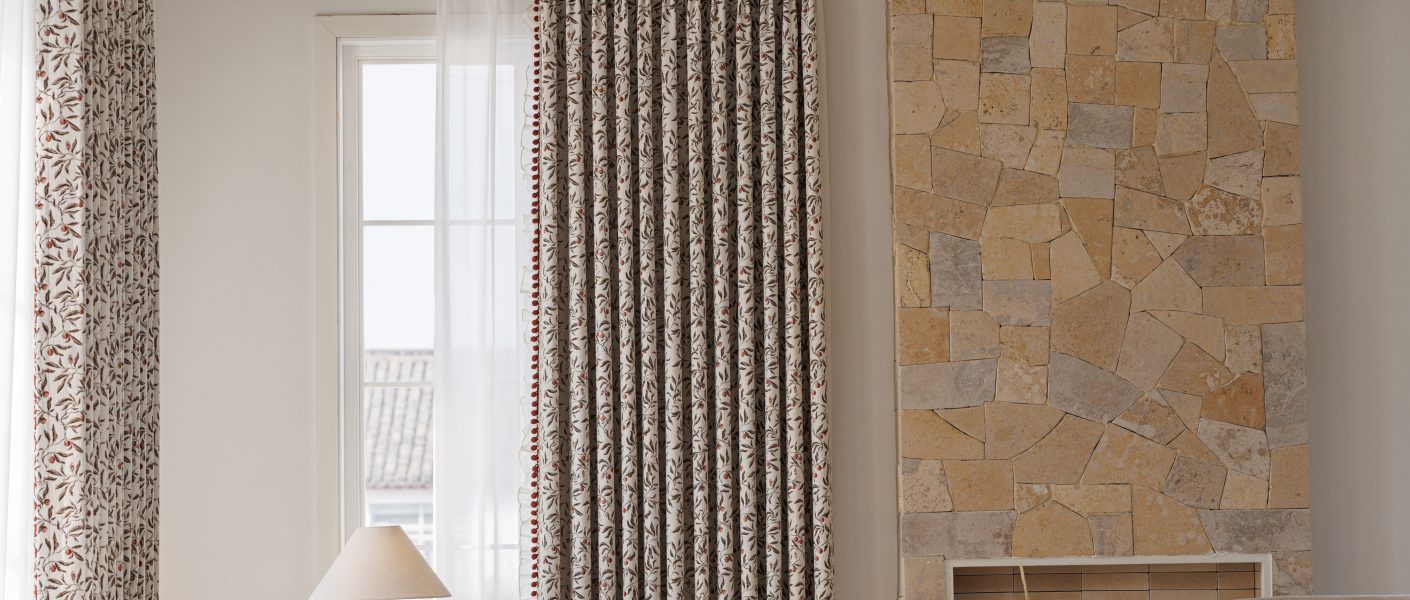
The right curtain rod does more than hold your curtains in place. Its length, height, diameter, and distance from the wall all affect how your curtains look and function.
A rod that is too short can leave open curtains covering the glass. One mounted too low can make a room feel shorter. And without enough clearance from the wall, curtains may catch on window handles or rub against the trim.
This guide explains how to measure for curtain rods in four steps, so you can choose the right size and order curtains with confidence.
What You’ll Need
Before you begin, gather:
- A steel tape measure
- A pencil
- A level
- Paper or a phone for recording measurements
Measure each window individually, even if several appear identical. Small differences in window size, trim, or surrounding wall space can affect the fit.
For multiple windows, label your measurements by room and position, such as “living room, left window.”
Measurement tip: This guide uses inches. To convert inches to centimeters, multiply by 2.54.
Step 1: Measure Your Curtain Rod Length
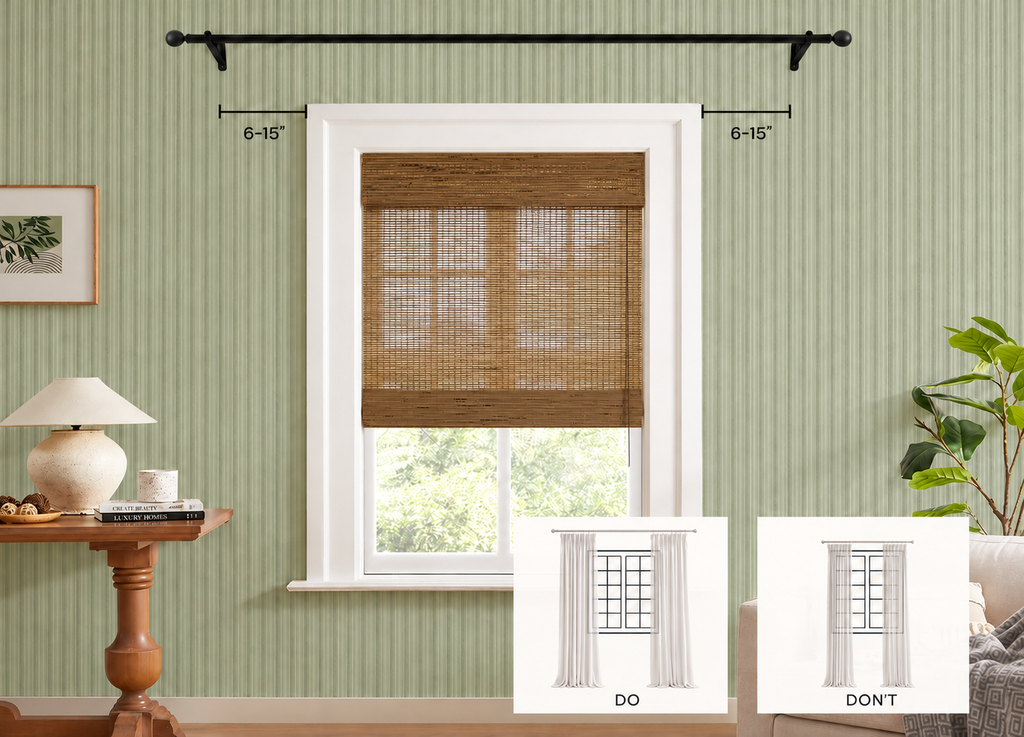
Your curtain rod should extend beyond both sides of the window frame. This extra length gives the curtains somewhere to sit when open, helping expose more glass and improve natural light.
Measure the Outside Width of the Frame
Measure horizontally from the outer edge of the trim on one side to the outer edge on the other.
If your window has no trim, measure the width of the window opening.
Add Space on Both Sides
For a practical starting point, add 8–12 inches on each side.
Curtain rod length = outside frame width + left extension + right extension
For example:
- Window frame width: 48 inches
- Left extension: 10 inches
- Right extension: 10 inches
- Target rod length: 68 inches
Choose an adjustable rod whose usable length includes your target measurement. Check the product’s measuring instructions, as decorative finials may be excluded from the listed rod length.
Allow for Curtain Stackback
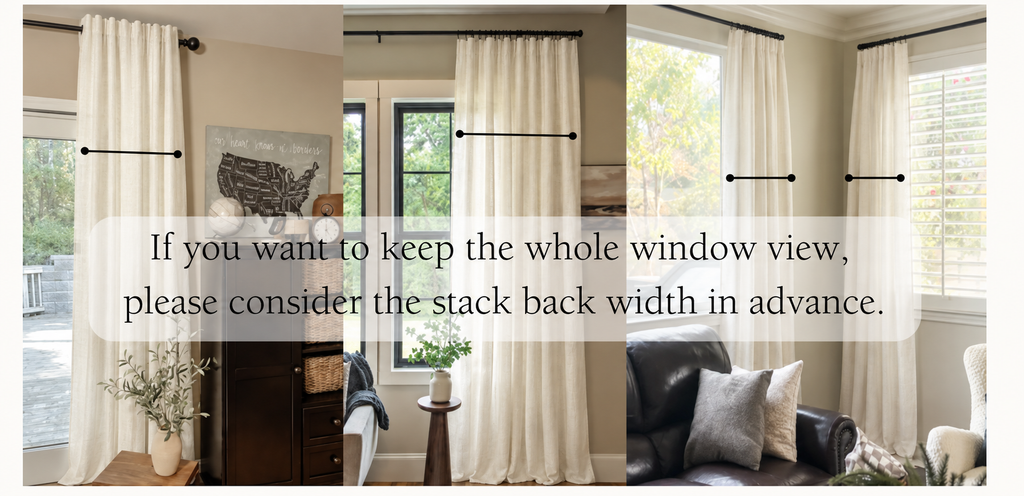
“Stackback” is the space curtains occupy when fully open. It varies with fabric thickness, curtain width, lining, and heading style.
Thick, lined curtains usually need more room than lightweight panels. If your goal is to keep the entire window clear, use the curtain supplier’s stackback guidance when available.
Also check the wall space beside the window. Nearby corners, cabinets, or adjacent windows may limit how far the rod can extend.
Tip: Leave room for both the mounting brackets and decorative finials when checking the available space.
Step 2: Determine the Rod Height and Curtain Length
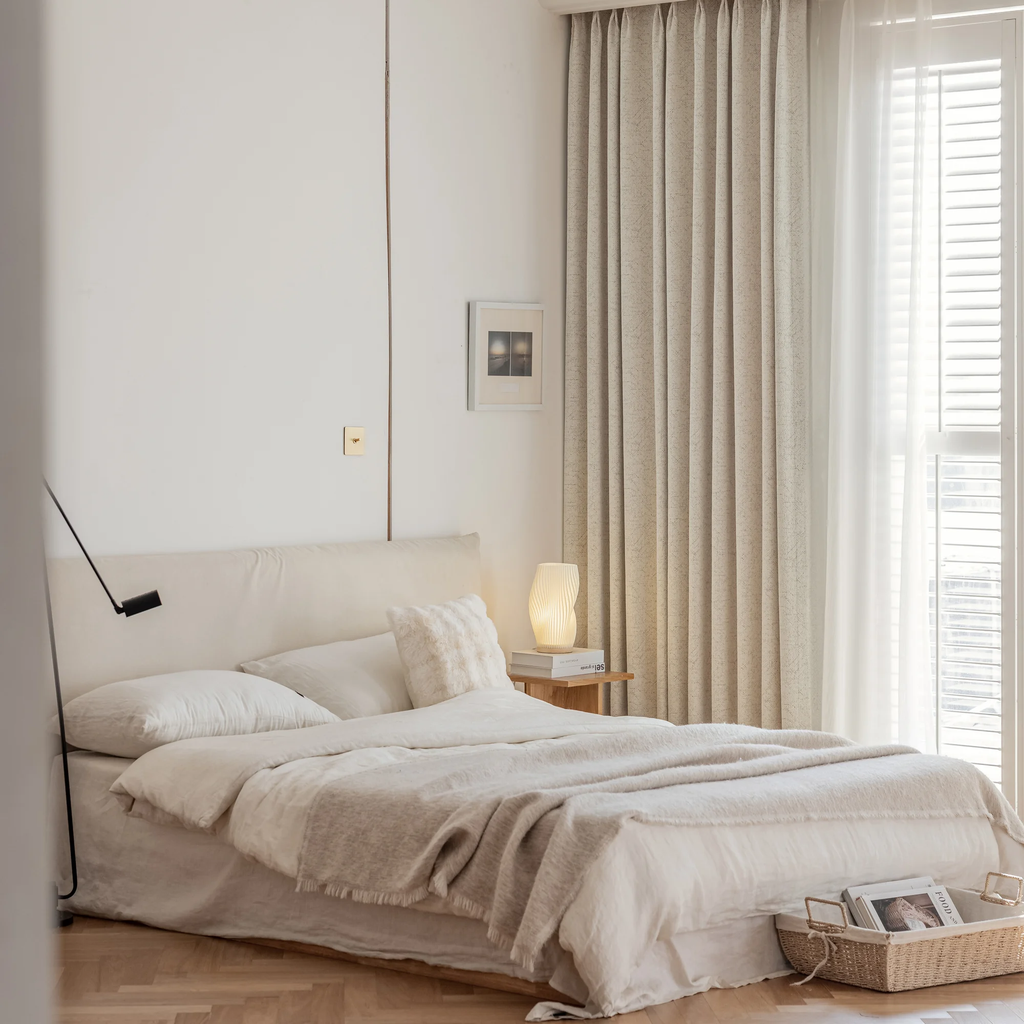
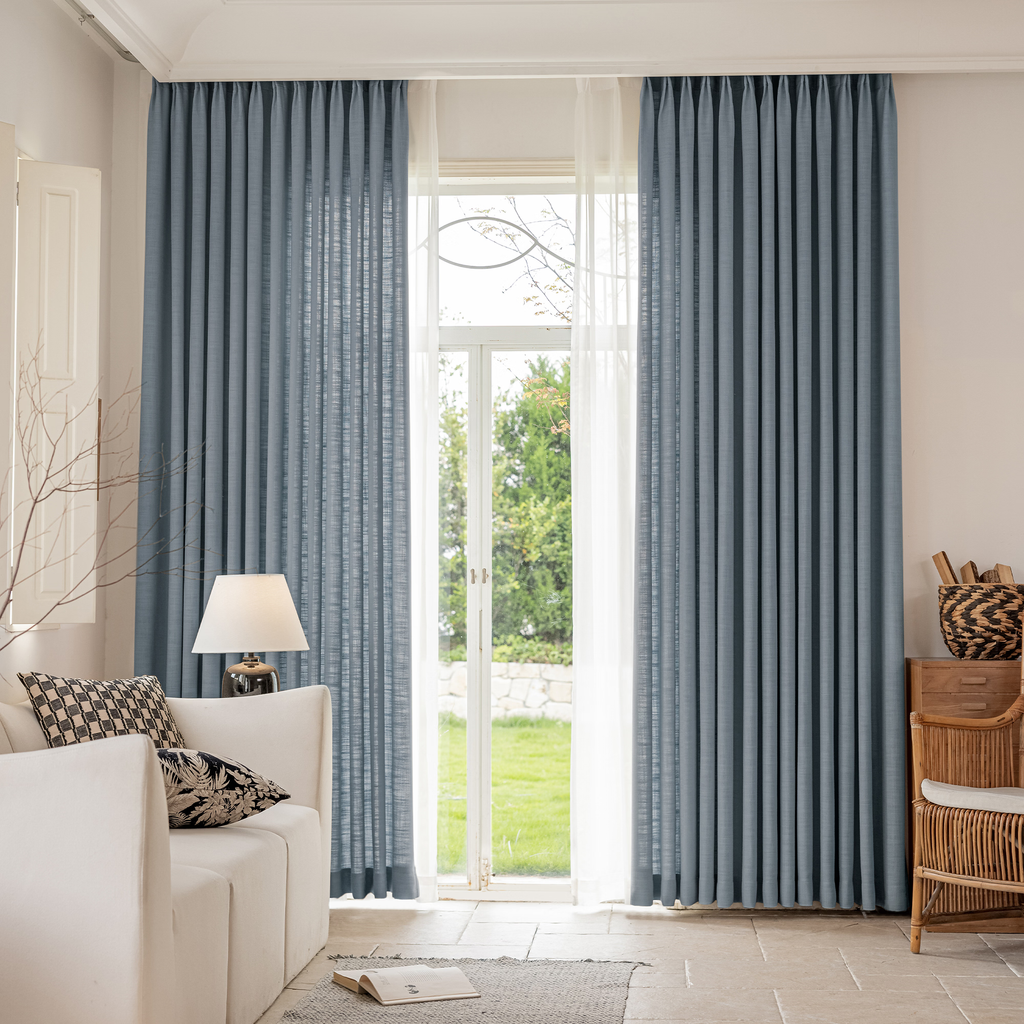
Rod height affects the proportions of the entire window treatment. Hanging curtains above the frame draws the eye upward and can make a room feel taller.
Choose Your Mounting Height
For many rooms, 4–6 inches above the top of the window frame is a useful starting point.
If there is more wall space above the window, you can position the rod higher for a longer, more dramatic look. Leave enough room for the brackets, finials, and any crown molding.
For multiple windows in the same room, aim for a consistent rod height wherever the architecture allows.
Mark the bracket positions lightly, then use a level to confirm that the rod will sit horizontally. Follow the bracket instructions to account for the distance between the mounting holes and the rod itself.
Measure for Your Curtain Heading
The correct starting point for curtain length depends on how the curtain attaches to the rod.
- Curtains hung from rings or hooks: Measure from the attachment point specified by the curtain supplier.
- Grommet curtains: Follow the supplier’s instructions for measuring from the rod to the hem, including any fabric above the grommets.
- Rod-pocket or tab-top curtains: Check whether the stated length includes the pocket, header, or tabs.
For the most accurate fit, install the rod and any rings before taking your final curtain measurements.
Decide Where the Hem Should Fall
Choose a finish that suits the room and how often you use the curtains:
- Just above the floor: Leave approximately ½ inch of clearance for easy movement and cleaning.
- Floor-touching: Let the hem lightly meet the floor for a tailored look.
- Puddled: Add approximately 1–3 inches beyond floor-touching length for a softer, decorative finish.
Measure at the left, center, and right of the window because floors may be uneven. For curtains that must stay clear of the floor, use the shortest measurement as your reference.
Step 3: Choose the Right Curtain Rod Diameter
Rod diameter affects both appearance and support. A slender rod can suit lightweight sheers, while heavier curtains generally call for a sturdier rod and brackets.
Use these sizes as a starting point:
| Curtain Type | Rod Diameter to Consider |
|---|---|
| Lightweight sheers | Around ⅝–¾ inch |
| Medium-weight cotton or linen blends | Around ¾–1 inch |
| Heavy, lined, or blackout curtains | Around 1–1¼ inches or larger, depending on the system |
Diameter alone does not determine how much weight a rod can hold. Material, wall thickness, span, bracket spacing, and mounting hardware also matter.
Check the manufacturer’s weight rating for the complete installation. For long spans, follow its instructions for center supports or additional brackets.
Tip: If you need a center support, confirm that your curtain arrangement can open as intended. Standard curtain rings usually cannot pass through a conventional center bracket.
Step 4: Check the Projection and Wall Clearance
Projection describes how far the rod or bracket extends from the wall. Product diagrams may measure this differently, so check the stated reference points before ordering.
Your curtains need enough space to hang and move freely without catching on:
- Window trim
- Handles, locks, or cranks
- Blinds or shades
- Deep window sills
As a starting point, many installations use approximately 3–4 inches of projection, but the right distance depends on your window and curtain style.
Grommet curtains need room for their folds to extend behind the rod. Double-rod systems need additional space between the curtain layers.
Measure the most prominent obstruction, then allow enough extra clearance for the fabric and its folds. Adjustable brackets can help you fine-tune the position.
Curtain Rod Measurement Checklist
| Measurement | What to Record |
|---|---|
| Window width | Outside edge to outside edge of the frame or trim |
| Rod length | Frame width plus the planned extension on each side |
| Mounting height | Planned rod position above the frame |
| Curtain length | Specified attachment point to the desired hem position |
| Rod diameter | Size suitable for the curtain weight and span |
| Projection | Distance needed to clear trim, hardware, and curtain folds |
| Available wall space | Room for brackets, finials, and open curtains |
Common Measuring Mistakes to Avoid
Choosing a rod that only matches the window width. This can leave the curtains covering the glass when open.
Ordering curtains before confirming the hardware position. Rod height, rings, and heading style all affect the finished length.
Assuming a thicker rod needs no extra support. Long spans may still require additional brackets.
Forgetting the finials. Decorative ends need space beyond the usable curtain-hanging area.
Measuring only one side for curtain length. An uneven floor can cause one panel to drag while the other hangs clear.
Frequently Asked Questions
How much wider than the window should a curtain rod be?
Start with 8–12 inches beyond the frame on each side, then adjust for the available wall space and the curtains’ stackback. Thick or generously gathered curtains may need more room to clear the glass fully.
Does curtain rod length include the finials?
It depends on the product. Many rods list the adjustable length without finials, but you should check the product diagram to confirm both the usable rod length and the overall installed width.
How high should I hang a curtain rod?
For many windows, 4–6 inches above the frame works well. A higher position can suit rooms with more space above the window. Consider the curtain length, ceiling details, and proportions of the room before marking the brackets.
Should I install the rod before measuring for custom curtains?
Yes, whenever possible. Installing the rod and hanging hardware first gives you a reliable starting point for the final measurements. Always follow the curtain supplier’s instructions for your chosen heading style.
Do wide windows need a center support?
They often do, but the requirement depends on the rod system, span, and curtain weight. Follow the manufacturer’s support and bracket-spacing instructions.
Accurate measurements make it easier to choose hardware that supports your curtains and gives them room to move. Confirm the rod length, mounting height, diameter, and projection first, then take your final curtain measurements for a balanced, well-fitted result.