Kitchen curtains do more than finish a room. They soften sunlight, add privacy, and bring warmth to a space you use every day. The best choice depends on where your window sits, how much light you want, and how often you cook.
This guide walks through fabric, style, color, and sizing so you can find a window treatment that looks at home in your kitchen and works for your routine.
Start with the Window
Before choosing a fabric or pattern, look at what your kitchen window needs to do.
Light. If direct sun creates glare, a light filtering curtain can soften it while keeping the room bright. In a darker kitchen, a lightweight fabric in white, cream, or another pale shade will leave more of the window unobstructed.
Privacy. Think about what someone can see from the street or a neighboring window. Café curtains cover the lower portion of a window while leaving the top open for daylight. A more tightly woven fabric offers greater coverage. Sheer curtains provide only limited privacy, especially at night when the kitchen lights are on.
Location. A curtain above the sink may encounter water and frequent handling. A window close to a cooking area calls for particular care: keep fabric clear of burners, hot surfaces, and anything that could catch or pull it into the cooking area. If a hanging curtain would be in the way, a fitted shade may be a better choice.
Choose a Fabric That Suits Kitchen Life
Kitchen window treatments may be exposed to steam, cooking odors, and occasional splashes. Check the care instructions for the specific fabric before ordering; fiber content alone does not guarantee that a finished curtain is machine washable.
Cotton has a relaxed feel and comes in a wide range of colors and patterns. It works well for café curtains and other casual styles, though it may wrinkle or shrink depending on the fabric and care method.
Linen adds natural texture and a softly lived in look. It suits coastal, farmhouse, and understated kitchens. Expect some wrinkling, and follow the product’s care instructions.
Blended fabrics can offer the look of a natural fiber with easier upkeep. Their performance varies, so check the fabric details and cleaning guidance rather than assuming every blend behaves the same way.
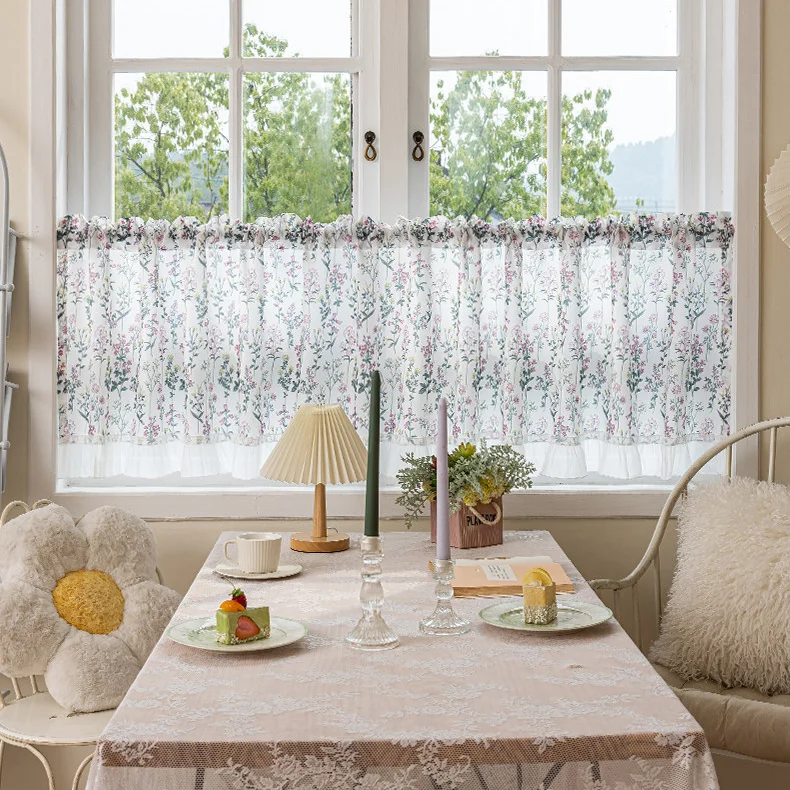
Sheer fabrics keep the window light and airy. They are useful when you want to soften daylight, but they are less suitable when nighttime privacy is a priority.
Delicate or difficult to clean fabrics, such as silk and heavy velvet, are generally less practical near a busy sink or cooking area.
Find the Right Style
Café Curtains
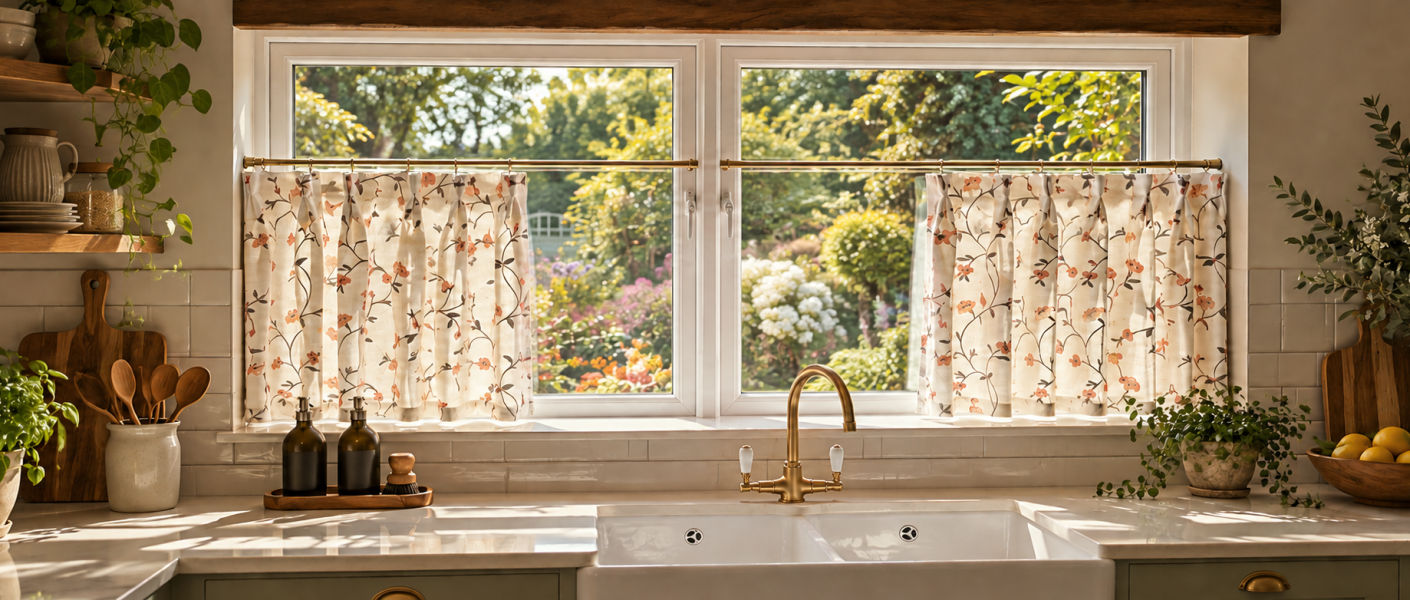
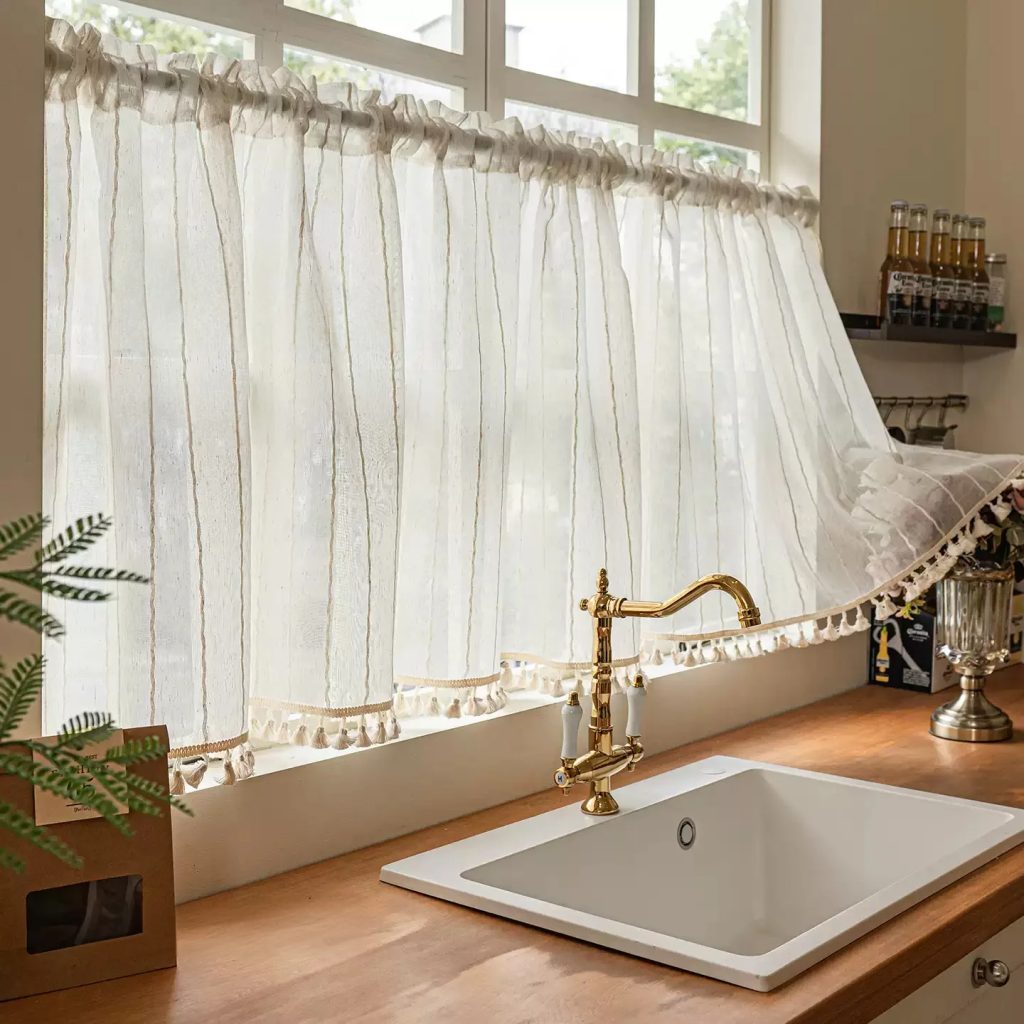
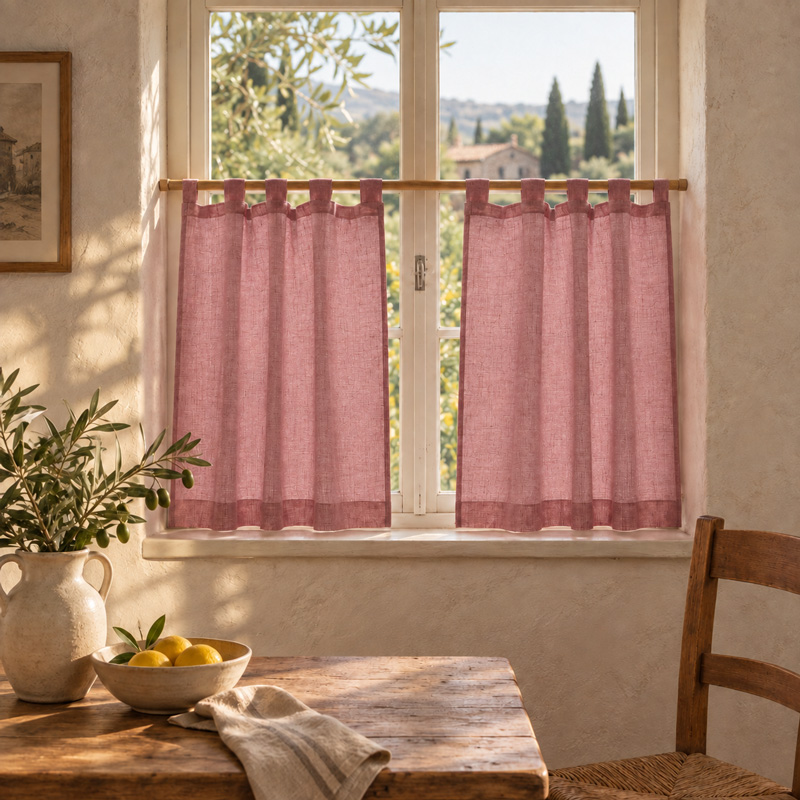
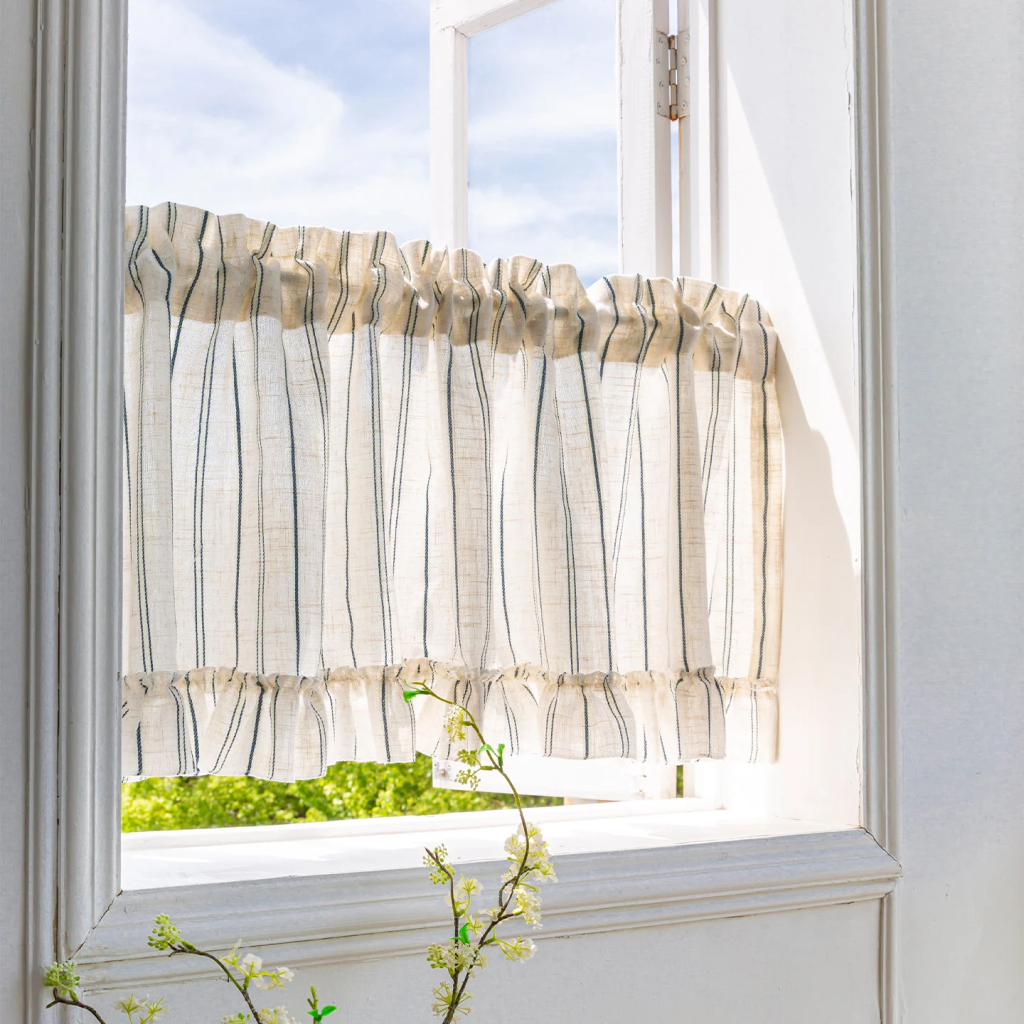
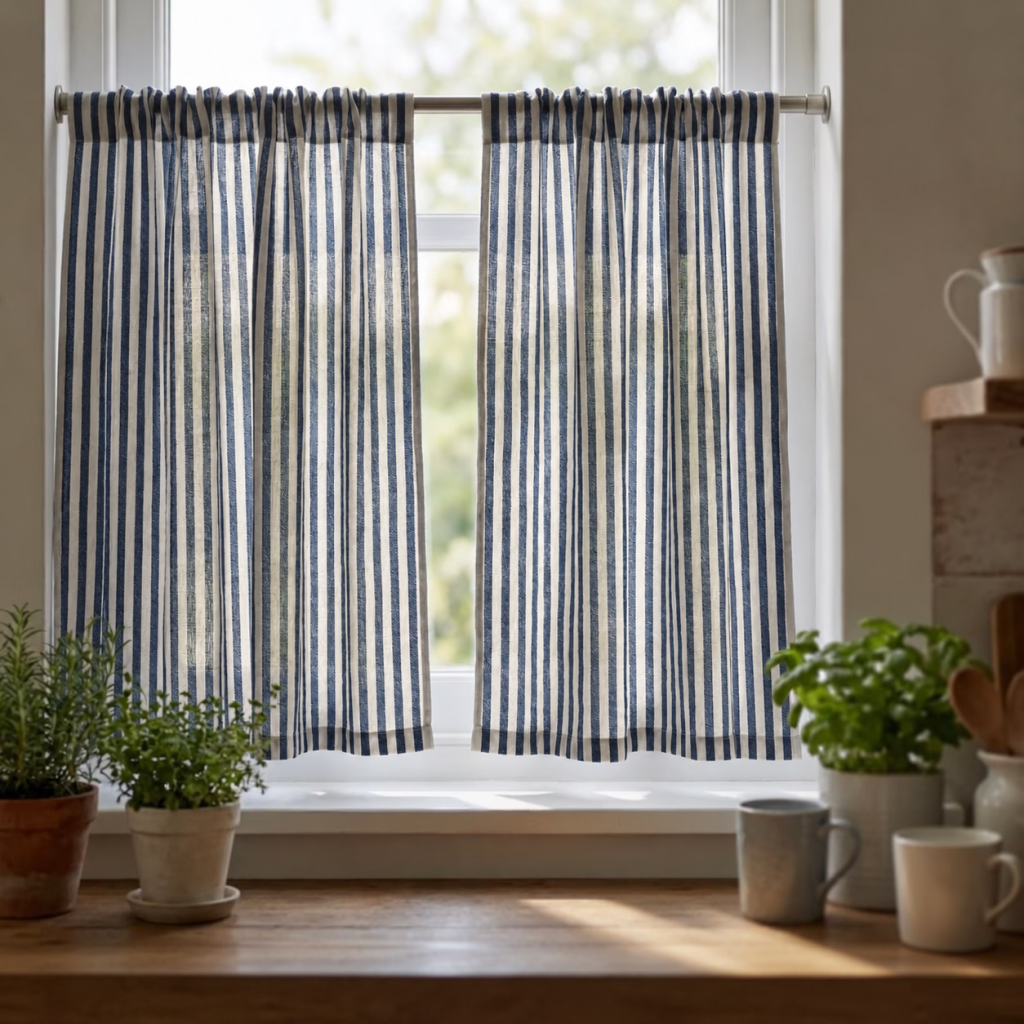
Café curtains typically cover the lower part of a window. They are a natural fit above a kitchen sink or anywhere you want some privacy without covering the entire view. Their simple shape works with everything from a cozy cottage kitchen to a clean, modern space.
Valances
A valance covers the top of the window and adds a decorative finish without taking up much space. It works well when privacy is not a concern or when you want to pair it with another window treatment.
Full Length Curtains
For a large window or a kitchen connected to a dining area, full length curtains can make the space feel softer and more finished. Choose a placement that lets the panels open easily and keeps them away from food preparation and cooking surfaces.
Roman Shades
Roman shades fold upward when raised and sit neatly within or above the window opening. They are a useful option when you want adjustable coverage without loose panels. Check the particular shade’s fabric and cleaning instructions before choosing it for a busy kitchen.
Pick a Color and Pattern
Look at your cabinets, backsplash, countertops, and wall color together. Your curtains can either blend into that palette or introduce a deliberate accent.
White, cream, beige, and soft gray keep the look light and flexible. Olive, terracotta, and warm brown pair naturally with wood and other earthy finishes. If the room is mostly neutral, a patterned curtain can add character without changing the rest of the kitchen.
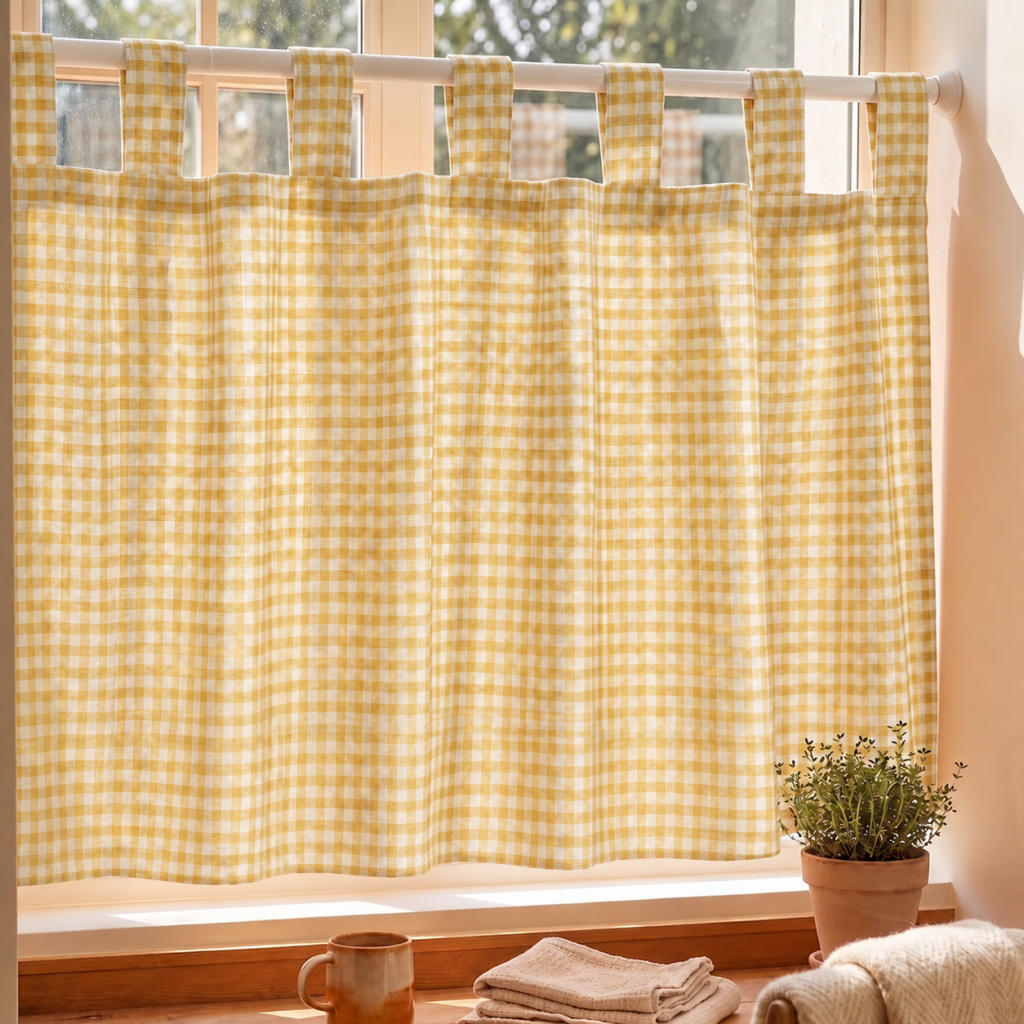
Pay attention to what is already happening in the room. A detailed backsplash may look best with a solid curtain, while simple cabinets and walls can leave room for stripes, checks, florals, or a larger print. For a coordinated look, repeat one color from the curtain elsewhere in the kitchen.
Measure Before You Order
Start with the place where the curtain or shade will actually hang. The window frame, curtain rod, and finished fabric can all have different measurements.
For curtain panels, measure the width you want the rod to cover, then decide how much fullness you prefer. As a general guide, the combined flat width of the panels can be about 1.5 to 2 times the rod width. For example, a 30 inch rod would call for roughly 45 to 60 inches of combined flat fabric width. Check the product listing to see whether its stated width refers to one panel, a pair, or the finished width after pleating.
For café curtains, measure from the rod’s planned position to the point where you want the hem to fall. They do not have to match a standard length: a hem near the sill, below it, or at another point can work depending on the window and the amount of coverage you want.
For full length curtains, measure from the rod or track to your desired hem position. In a kitchen, a hem that clears the floor is often easier to keep clean than fabric that pools on it.
For Roman shades, follow the seller’s measuring instructions for an inside or outside mount. Check mounting depth and hardware requirements before placing a custom order.
Keep Them Looking Their Best
Choose a treatment you can comfortably remove and clean according to its care label. If you cook often, check periodically for dust, grease, or odors rather than relying on a fixed washing schedule. Make sure rods, rings, and mounting hardware suit both the weight of the fabric and the window location.
The Right Choice for Your Kitchen
A small window may need only a simple café curtain. A larger window might benefit from full length panels, while a Roman shade can offer coverage without loose fabric. Once you know how much light and privacy you need, the choices become easier: select a practical fabric, measure for the way it will hang, and choose a color that belongs in your kitchen.
Frequently Asked Questions
Are sheer curtains private enough for a kitchen?
They can soften the view during the day, but they generally provide limited privacy at night when the lights are on. Choose a more closely woven fabric or add another window treatment if nighttime privacy matters.
Do kitchen curtains need a liner?
Not always. A liner may help with light control or privacy, but it also changes the curtain’s weight, appearance, and care requirements. Choose one based on the coverage you need and the product’s available options.
How often should I wash kitchen curtains?
There is no single schedule that fits every kitchen. Check them for visible dirt, cooking residue, and odors, and clean them according to the care label.
Can I hang kitchen curtains without drilling?
A tension rod may work for a lightweight café curtain if it fits the window and can support the fabric securely. Check the rod’s specifications and the mounting surface before use.
Can I use different window treatments in the same kitchen?
Yes. For example, a café curtain above the sink can work alongside a Roman shade on another window. Repeating a color or fabric texture will help them feel connected.