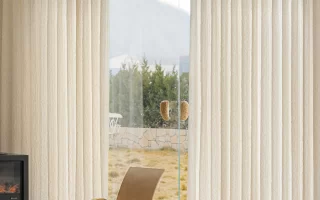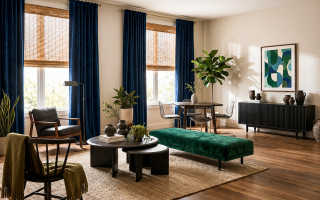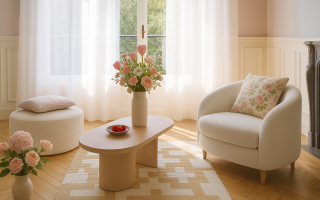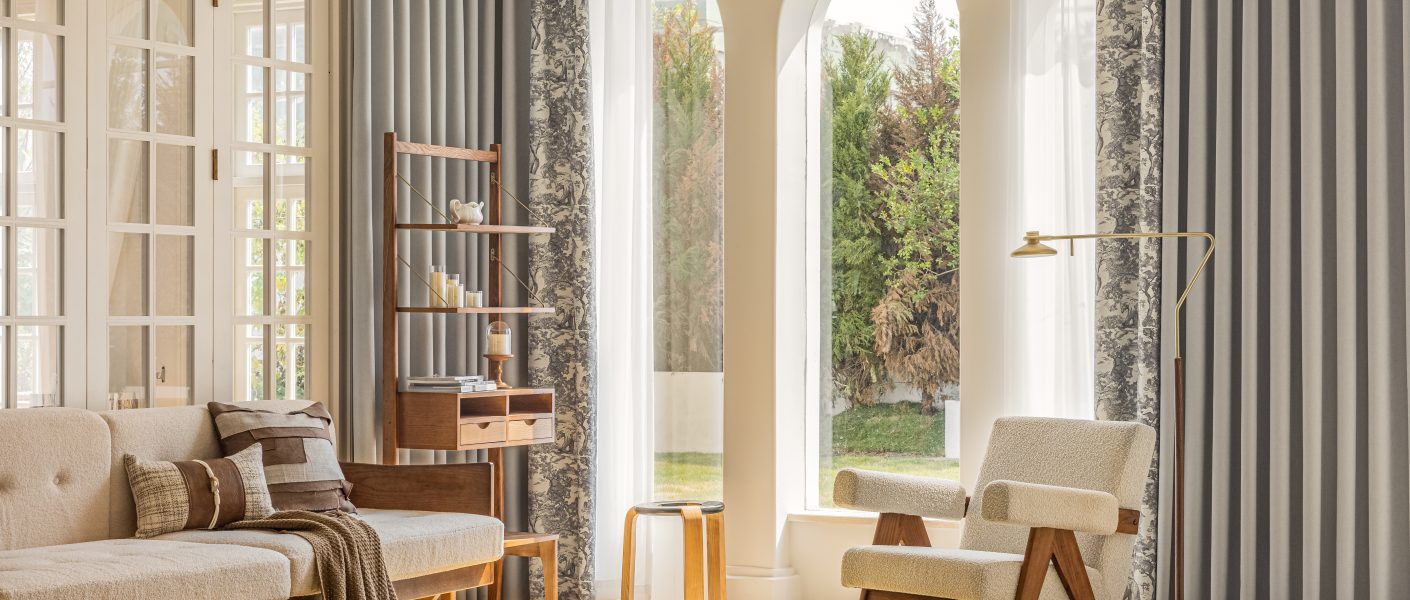
The key to mixing patterned curtains is simple: keep your room’s palette to two or three main colors, then vary the scale of the patterns. Start with one statement design, introduce smaller supporting patterns, and use a subtle stripe or check to bring everything together.
With this approach, florals, geometric prints, damasks, stripes, and checks can all work beautifully in the same space. The result feels thoughtfully styled and harmonious.
That is the starting point. A few additional principles can make all the difference when decorating with multiple patterns. Here is how to put them into practice throughout your home, along with the mistakes to avoid if you want your space to feel balanced.
For years, plain curtains in neutral shades were the reassuring choice. A more personal, expressive approach to decorating gives colors, textures, and patterns a greater role in shaping a room.
This approach is often described as “considered maximalism”: a richer interior where patterns have room to shine and every element has a purpose. The aim is to build thoughtful combinations, with each fabric contributing to the overall design.
Balance remains essential. Even in a room filled with different patterns, the eye needs quieter areas, a consistent palette, and a visual thread that connects the space.
Curtains are a particularly useful way to experiment. They cover a generous surface area and can instantly change the atmosphere of a room, with less commitment than wallpaper, a patterned sofa, or replacing your furniture.
A Styling Tip from Sophora Déco
When patterns do not work well together, the prints themselves are not always the problem. Very often, the color palette lacks consistency.
Before combining florals, stripes, checks, or geometric designs, decide on your colors. Once that foundation is in place, mixing different patterned curtains becomes much easier.
Start with a Shared Color Palette
Before choosing any patterns, establish the main colors for your room.
Two or three colors are usually enough.
This is perhaps the most important step in mixing prints. When each pattern draws from the same small palette, the eye naturally connects them, even when their designs are very different.
For example, consider warm white, terracotta, and a touch of olive green.
As long as your floral curtains, stripes, cushions, and geometric patterns stay within these tones, the room will retain a sense of visual cohesion.
Patterns can have entirely different designs and still work together when they share a common color language.
5 Steps to Mixing Patterned Curtains Successfully
1. Choose Your Main Pattern
Start with the pattern you love most and let it set the tone for the room.
This might be a large floral, a botanical print, a damask design, a woven jacquard, or a bold geometric pattern.
These curtains become the focal point of your scheme. The other patterns should support that focal point and allow it to stand out.
If you have large floral curtains in your living room, for example, use them as the starting point for your palette and the fabrics you introduce elsewhere.
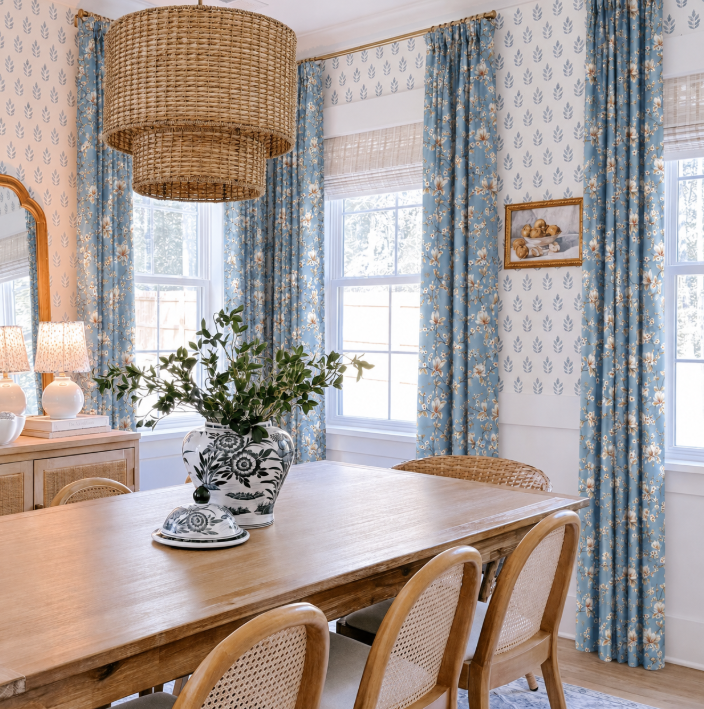
2. Vary the Scale of Your Patterns
One of the most common mistakes is combining several patterns of a similar size.
When two or three designs have the same visual scale, they attract attention in much the same way. They begin to compete, and the room can quickly feel busy.
An easy solution is to introduce a contrast in scale.
For example, combine:
- A large floral pattern.
- A small geometric design.
- A fine stripe or small check.
Pairing a large floral with a small repeating pattern creates a more comfortable visual hierarchy. Your eye finds the main feature first, then moves naturally toward the supporting patterns.
3. Add a Pattern That Connects the Others
Stripes, checks, and gingham are especially useful when bringing several patterns together.
Their regular structure adds rhythm without introducing too much complexity. A stripe or check can, for instance, connect the flowing shapes of a floral with the more structured lines of a geometric design.
Think of it as a connecting pattern.
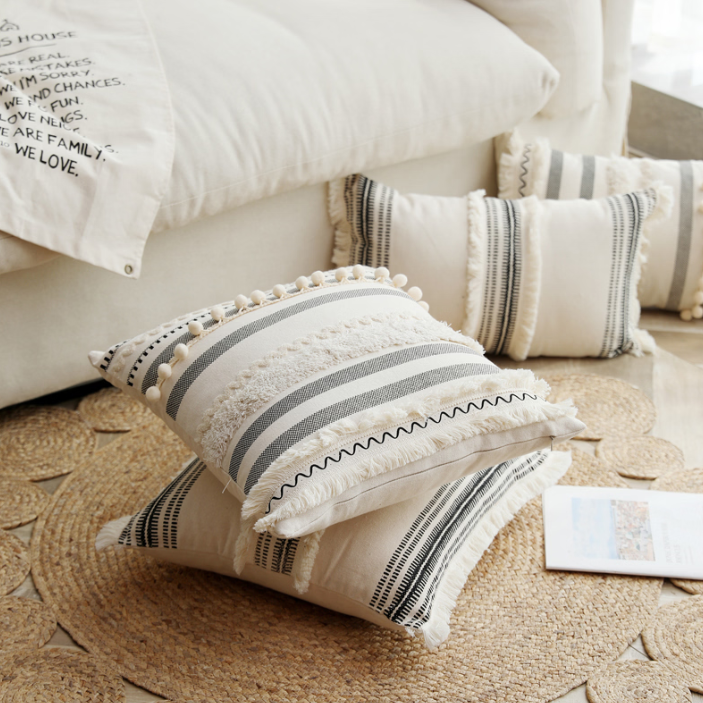
You could use it on:
- The curtains at a second window.
- A Roman shade.
- A cushion.
- An upholstered bench or window seat.
- Another small fabric accessory.
This pattern does not need to become the room’s main feature. Its role is to balance the more expressive designs.
4. Repeat a Shared Color Across Your Patterns
Even very different patterns can feel connected when they repeat a common color.
Choose a shade from your main curtains and introduce it elsewhere in the room.
If your large floral includes a touch of soft ochre, for example, that same shade could appear in:
- A stripe.
- A cushion.
- A rug.
- An armchair.
- A window shade.
- A pair of solid-colored curtains.
That color becomes a visual thread running through the room.
You do not need to use large amounts of it. A few subtle repetitions are often enough to make the whole scheme feel more intentional.
5. Make Room for Solid Colors and Quiet Areas
Mixing patterns does not mean using them on every surface.
Solid-colored areas give patterned fabrics the space they need to stand out.
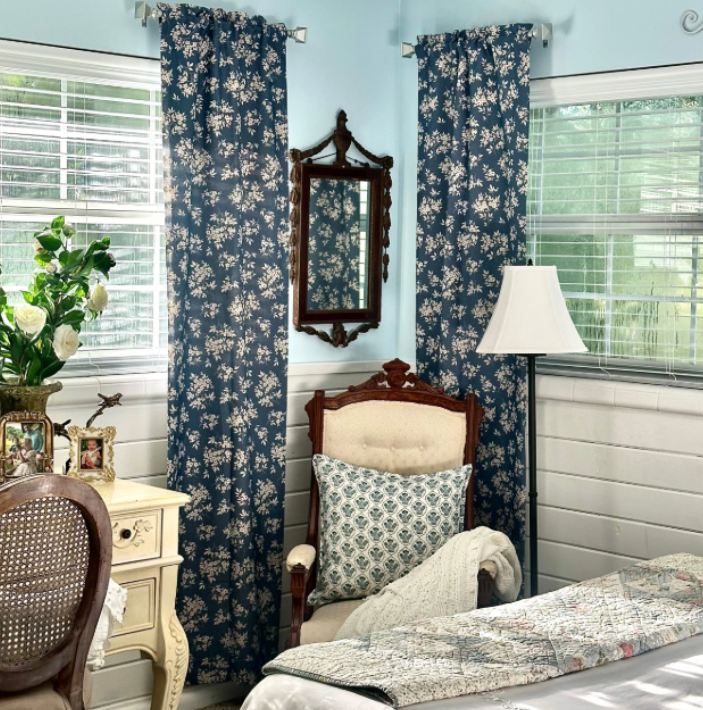
Balance patterned curtains with:
- Plain walls.
- A simple, understated sofa.
- Solid-colored cushions.
- A low-contrast rug.
- Furniture with clean lines.
- Natural materials without prominent patterns.
These quieter areas are sometimes called “negative space” in interior design.
They are what allow a room to feel warm, layered, and thoughtfully arranged while keeping the overall effect comfortable.
How to Apply These Ideas to Your Curtains
Using Different Curtains on Two Windows in the Same Room
Have two windows and want to give each one its own treatment?
Use your main pattern on the room’s most prominent window. For the second, choose a stripe, a small print, or a more understated pattern in the same palette.
This creates a more layered scheme while keeping the two windows visually connected.
A shared palette with different patterns is one of the easiest combinations to get right.
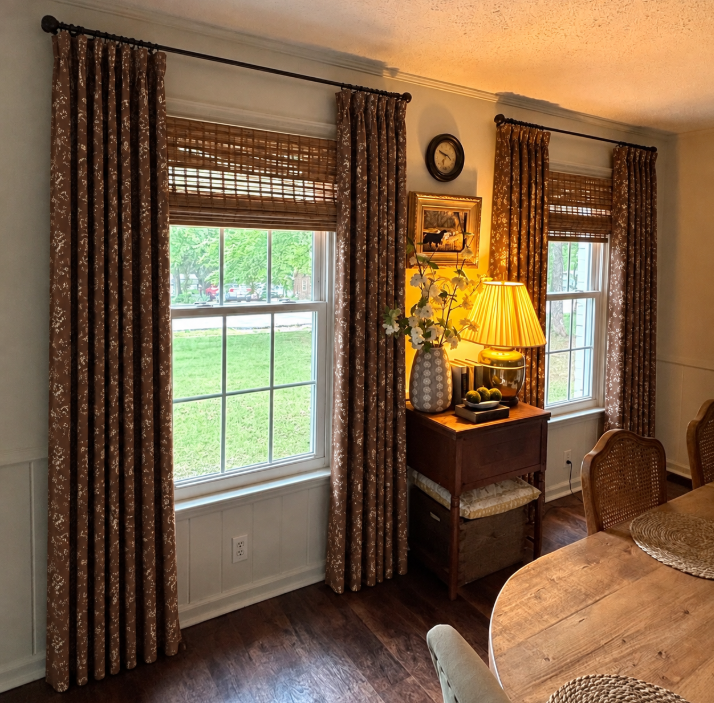
Layering Curtains with a Roman Shade
Layering window treatments offers another subtle way to combine patterns.
For example, you could hang patterned curtains in front of a textured or lightly patterned Roman shade.
The curtains carry the main design, while the shade adds a quieter second layer.
Avoid combining two very large, high-contrast patterns in this arrangement. When the curtains are already a strong decorative feature, the Roman shade will usually work best with a more restrained design.
Coordinating Curtains with Your Sofa and Rug
Your curtains do not need to match your sofa, rug, or cushions exactly. They simply need to feel connected.
Instead of searching for an identical pattern or an exact color match, pick up one shade from the curtains in another part of the room.
A color in a curtain’s floral design might reappear in a solid-colored cushion or a small detail in the rug.
That repetition creates continuity while allowing the room to feel relaxed and individual.
What to Do—and What to Avoid
| Do | Avoid |
|---|---|
| Limit the room to two or three main colors. | Introducing a new color with every pattern. |
| Combine large and small patterns. | Using only patterns of the same scale. |
| Use stripes, checks, or gingham to connect other designs. | Layering three large, visually busy prints. |
| Repeat a shared color across several fabrics. | Choosing patterns with no clear color connection. |
| Order fabric samples and view them together in the room. | Choosing solely from small images on a screen. |
| Surround bold patterns with quieter walls, furniture, or fabrics. | Adding a different pattern to every available surface. |
Create a Cohesive Patterned Interior with Sophora Déco
Decorating with patterns becomes much easier when you can choose from a variety of design families, beyond a small selection of plain curtains.
At Sophora Déco, our made-to-measure curtain collection embraces floral and botanical patterns, damask designs, stripes, checks, geometric motifs, and jacquard fabrics, where the pattern is created through the weave itself.
This variety allows you to build a room around a shared palette while exploring different designs, textures, and pattern scales.
A large floral can become the room’s focal point, supported by a stripe, a small geometric design, or a quieter fabric.
This is what makes mixing patterns so rewarding: each fabric brings something different, and the interest comes from how they work together.
When colors, proportions, and styles are well balanced, the room feels naturally composed, with a sense of depth and individuality.
The Easiest Way to Check Your Combination: Start with Fabric Samples
Colors and pattern sizes can look quite different in person from the way they appear on a screen.
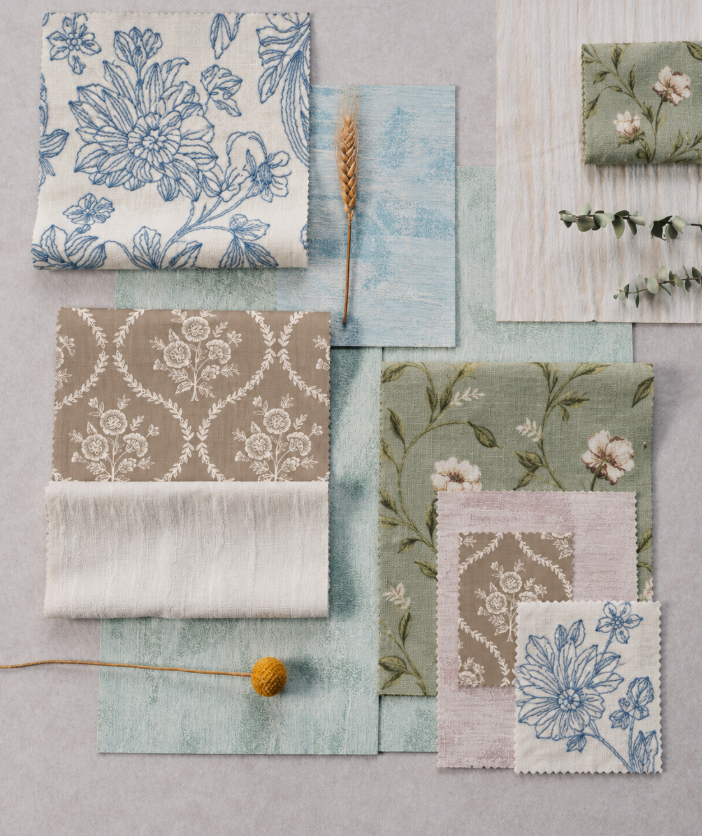
A photograph can show the overall design of a fabric, but it may not accurately convey:
- The actual size of the pattern.
- The depth of the colors.
- The raised detail of the weave.
- The texture.
- The degree of transparency.
- The way the material responds to light.
Ordering fabric samples is therefore one of the most reliable ways to assess a combination before choosing multiple patterned curtains.
Select several fabrics from the same color family and place them side by side.
Then view them in the room where they will be used, near the window, sofa, rug, or wall.
Check them at different times of day: in the morning, in stronger daylight, toward the end of the day, and under artificial lighting.
You will soon get a clear sense of whether the patterns work together.
For made-to-measure curtains, this step is especially useful. It helps you confirm the color, fabric, and pattern scale before finalizing your combination.
Frequently Asked Questions About Patterned Curtains
Can You Use Two Different Curtain Patterns in the Same Room?
Yes. Two different curtain patterns can work beautifully in the same room when they share a palette of two or three colors and differ in scale.
For example, pair a large floral with a fine stripe or a small geometric design.
The difference in scale gives each pattern its own role and helps them sit comfortably together.
How Many Patterns Can You Mix in One Room?
For most interiors, three patterns are a useful guideline.
You could combine:
- One large main pattern.
- One small or medium supporting pattern.
- One stripe, check, or simple design to connect them.
If you want to add more richness, introduce solid-colored fabrics and texture before adding a fourth or fifth bold print.
Texture can create as much depth as pattern. Linen-look fabrics, velvet, chenille, bouclé, and jacquard can all add dimension without making the room feel visually heavy.
What Patterns Work Well with Floral Curtains?
Stripes, checks, and small geometric designs are among the easiest patterns to pair with florals.
Their regular structure balances the organic shapes of flowers and foliage.
Keep the colors connected through a shared palette.
For example, large green-and-ecru floral curtains could work with a small ecru-and-green check or a stripe featuring the same shade of green.
Should Curtains Match or Contrast with the Sofa and Rug?
Aim for coordination, using a shared color to connect your curtains with the sofa and rug.
Repeat a shade from the curtains in a cushion, rug, throw, or small decorative accessory.
This helps the room feel cohesive while leaving room for variety.
Do Patterned Curtains Make a Room Look Smaller?
Not necessarily.
A pattern alone does not make a room feel smaller. Visual crowding is more likely when several high-contrast patterns are used together without a clear connection.
Large patterns in soft colors or tonal shades can even make a surface feel more expansive and add a sense of depth.
By comparison, several high-contrast prints of the same scale, each introducing many different colors, can make a small room feel visually denser.
The most dependable approach is to keep the palette focused, vary the scale of your patterns, and leave enough solid-colored surfaces around the curtains.