Neutral palettes are the quiet powerhouses of interior design. Among them, taupe—nestled elegantly between warm brown and cool gray—stands out for its versatility and timeless polish. When you set taupe alongside crisp white walls, you get a living room that feels calm, contemporary, and effortlessly refined. This guide walks you through choosing curtains, coordinating furniture, and layering textures so your white-and-taupe scheme looks curated rather than flat.
Why Taupe Works So Well in Living Rooms
Taupe is a “chameleon” neutral that warms up modern spaces, softens classic rooms, and grounds rustic schemes. It pairs beautifully with white, beige, and natural materials, creating a soothing, welcoming mood that’s ideal for living rooms, dining rooms, and bedrooms. Beyond looks, taupe’s quiet character helps other elements—art, wood grains, metals, textiles—shine.
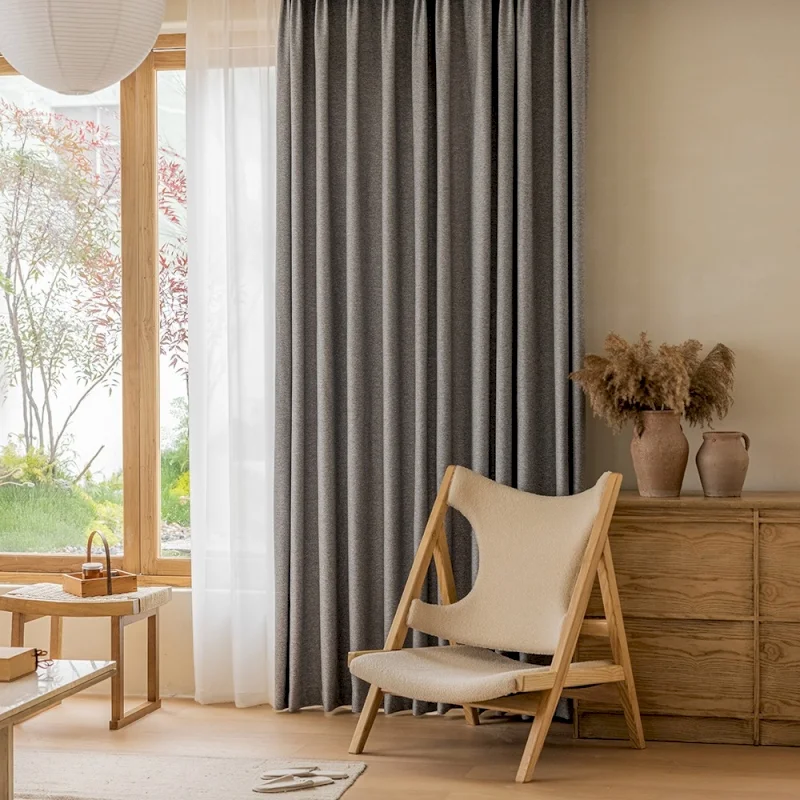
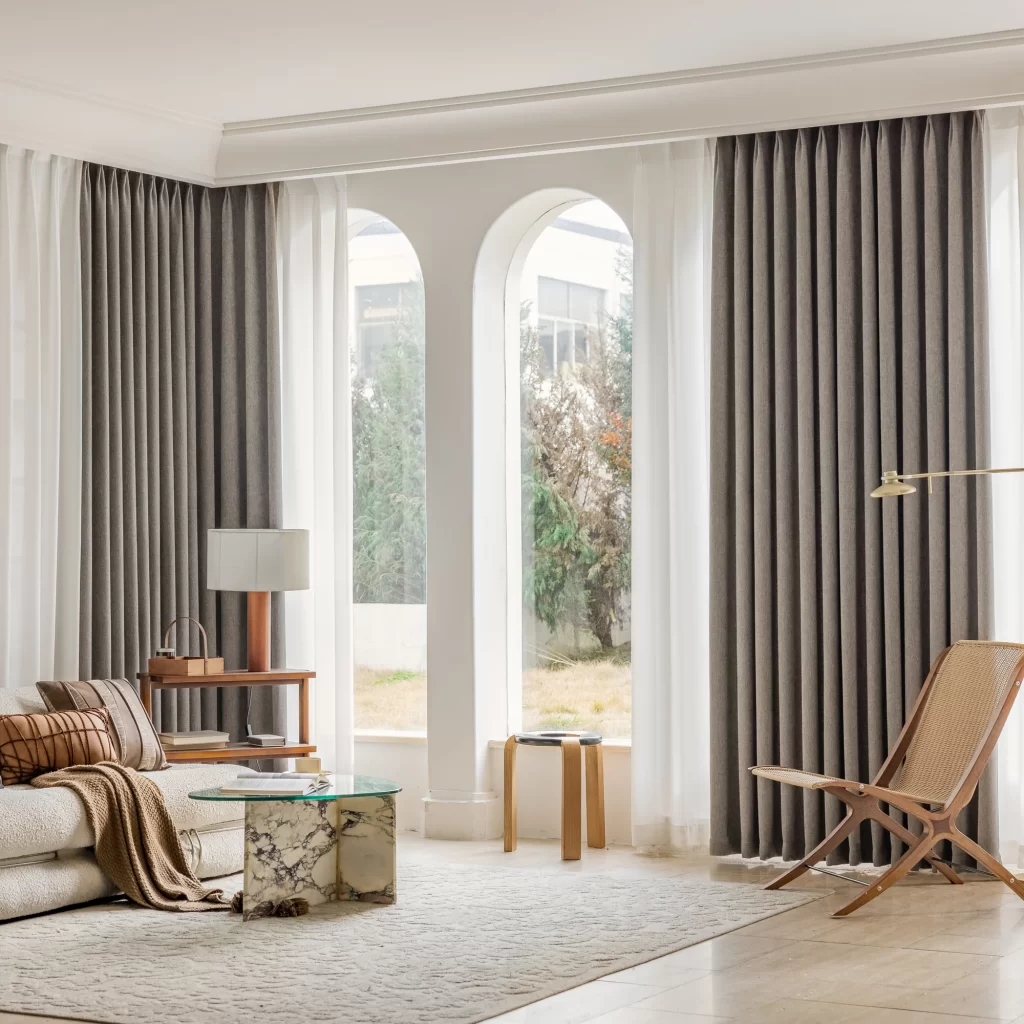
Curtain Choices for White & Taupe Walls
1) Soften and Brighten
- Beige, sand, or cream curtains keep the palette airy and cohesive when you have taupe walls.
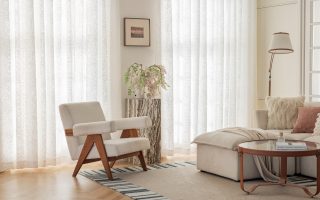
- Choose lightweight linen, cotton, or voile to amplify natural light and create a breezy feel.
- Tip: Aim for 1.5×–2× fullness (fabric width vs. window width) so panels look lux, not skimpy.
2) Add Gentle Contrast
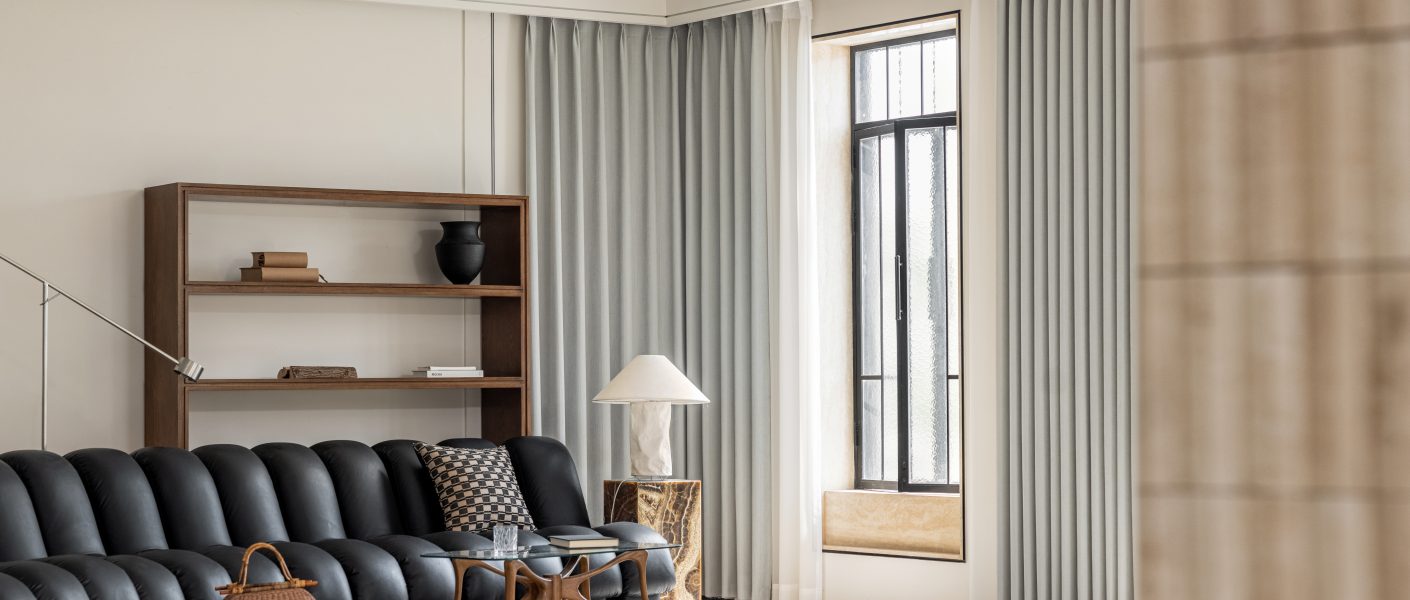
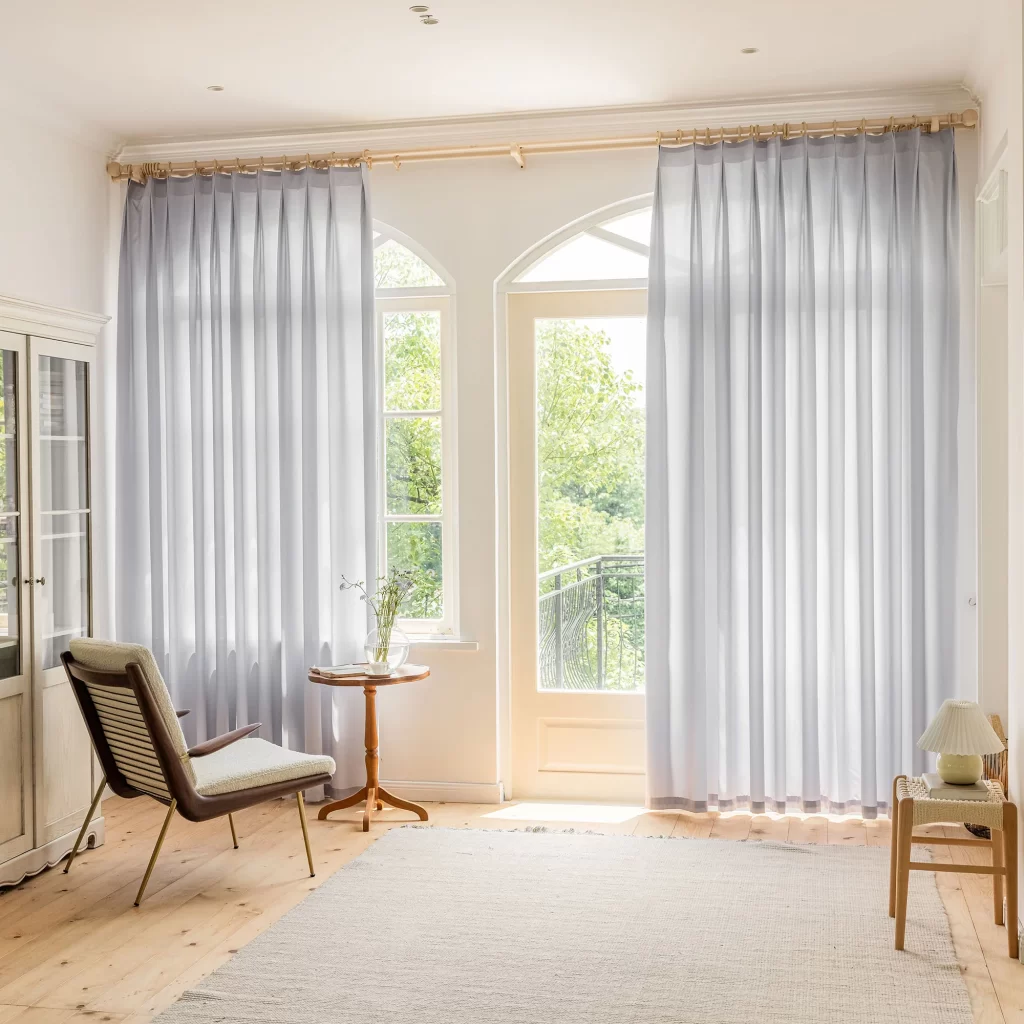
- On white walls, bring depth with taupe, mushroom, or warm gray curtains.
- Subtle tone-on-tone stripes or a slubbed/linen texture add visual interest without noise.
3) Make a Statement
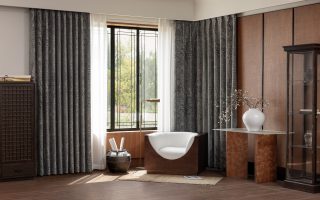
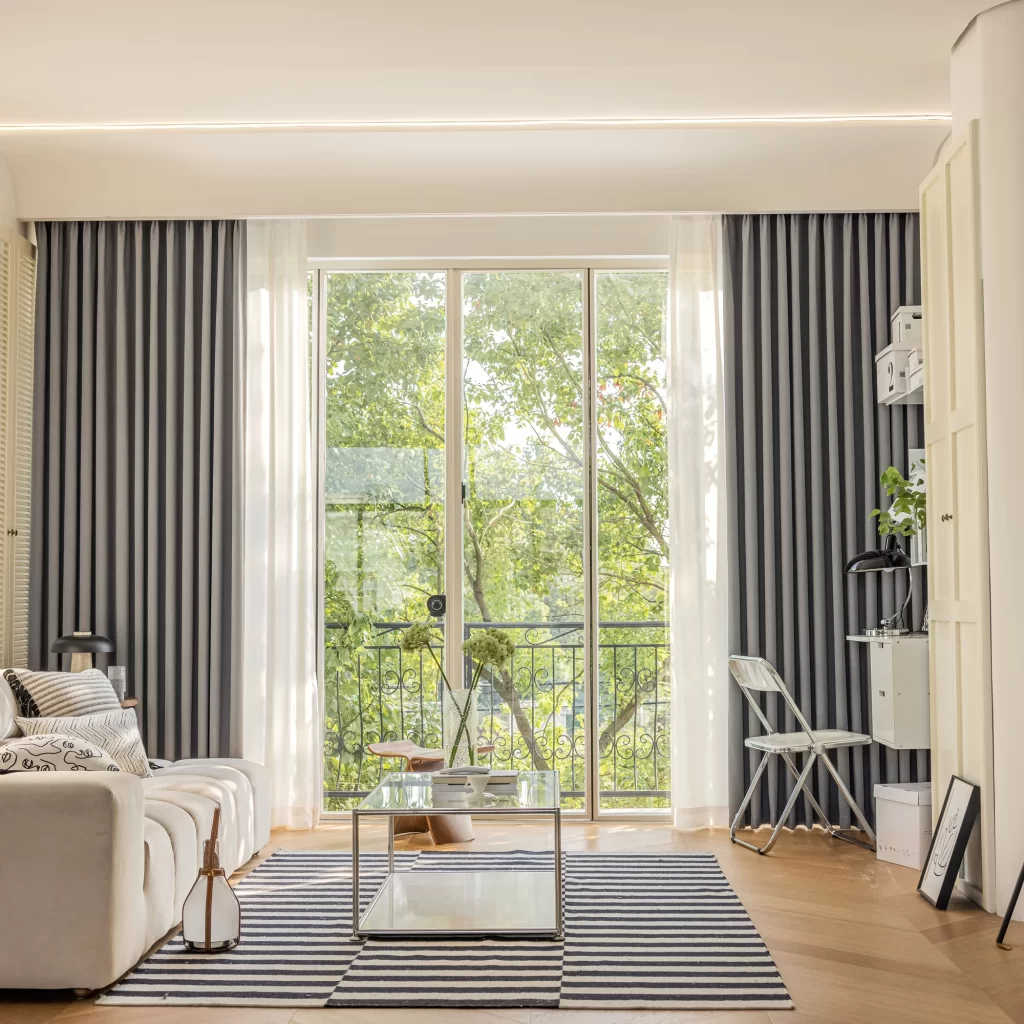
- Prefer crisp edges and modern drama? Try charcoal, espresso, or black curtains against white walls.
- Balance the depth with pale upholstery, cream throws, and light woods so the room stays bright.
4) Play With Pattern & Texture
- Small-scale geometrics, herringbone, or broken checks read sophisticated in neutrals.
- Velvet adds a tailored, hotel-chic note; bouclé and washed linen read organic and relaxed.
Practical Picks
- Thermal-lined or blackout-lined curtains improve insulation, regulate light, and protect fabrics.
- Sheer + opaque layering (double rod or track) gives you daytime glow and night-time privacy.
- Motorized tracks are discreet, child-safe, and great for tall windows or hard-to-reach corners.
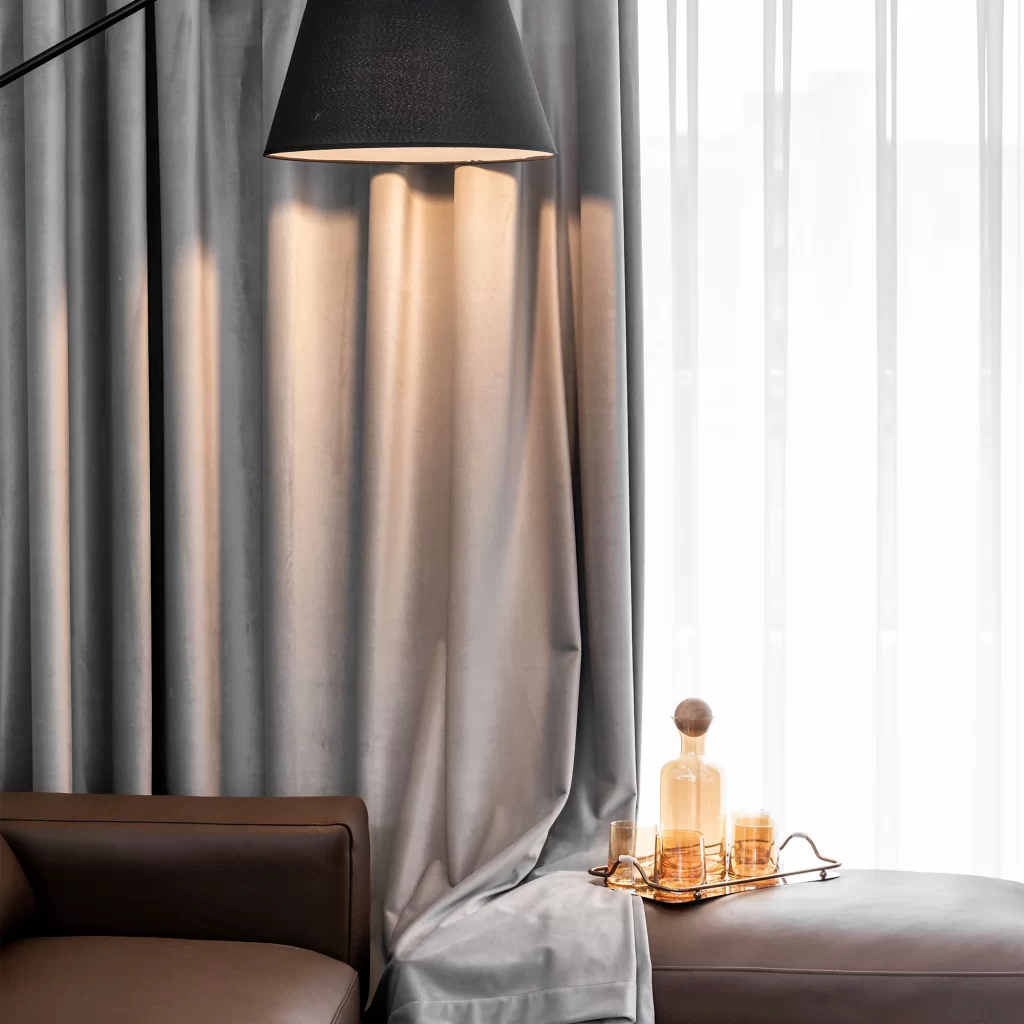
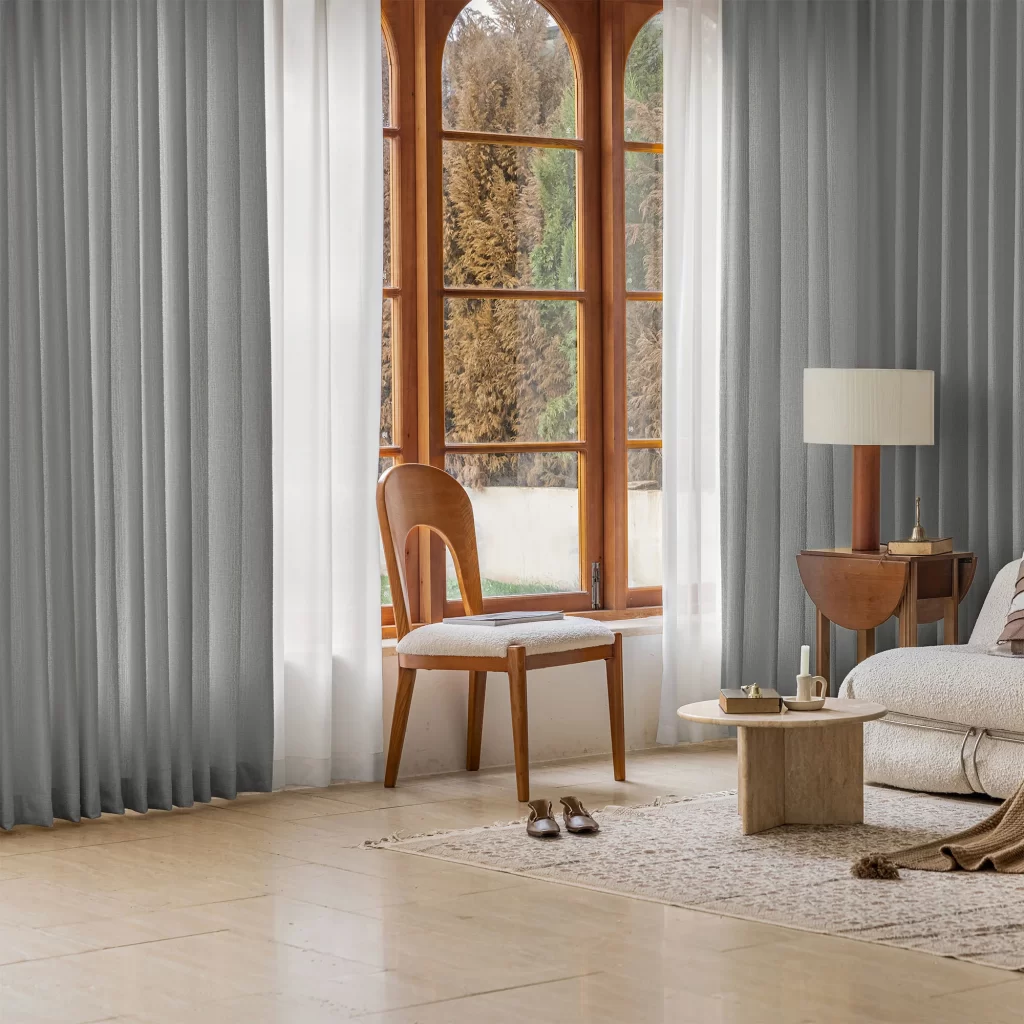
Furnishing the Space: Sofas & Accents
Keep large pieces calm; let accents do the talking.
- Sofas: beige, oatmeal, light gray, or taupe itself for a serene base.
- Contrast accents: cushions or rugs in ink blue, forest green, sage, or muted mustard.
- Materials: natural oak, ash, rattan add warmth; black metal frames or lamps sharpen lines.
- Metals: brushed nickel, aged brass, or matte black—repeat one finish two or three times for cohesion.
Color Pairings That Always Work
Taupe + Beige (Classic Harmony)
A never-fail duo for tranquil rooms. Use beige curtains with taupe walls to blend seamlessly, then layer cream throws and natural jute for depth. Add a warm metal (antique brass) to keep it from feeling too pastel.
Taupe + Black & White (Modern Contrast)
Start with white walls, ground the space with taupe textiles (curtains, cushions), and sharpen edges with black frames, lamps, or side tables. The result is clean, gallery-like, and sophisticated.
Contemporary Looks & Smart Textiles
Today’s taupe living rooms favor edited silhouettes, natural fibers, and quiet luxury textures. Curtains do double duty: they’re decorative and functional.
- Thermal/energy-saving linings help in winter and summer.
- Acoustic-weave fabrics subtly absorb sound for softer, calmer rooms.
- Motorized or wand-draw systems streamline daily use and feel wonderfully polished.
Light, Height, and Small-Space Strategy
Get the Lighting Right
Neutrals need layered light to avoid looking flat.
- Combine ambient (ceiling/wash), task (reading lamps), and accent (picture lights).
- Use sheers to pull daylight deep into the room; add dimmable lamps for evening warmth.
Make a Small Room Feel Bigger
- Choose light curtains (off-white, cream, pale beige) to reflect light.
- Hang rods or tracks 10–15 cm (4–6 in) above the window and extend 10–20 cm (4–8 in) past each side so panels don’t block glass when open.
- Go floor-skimming or light break (not short) for taller perceived ceilings.
- Keep patterns small-scale; reserve bold motifs for cushions or a single art piece.
Styling Formulas You Can Copy
Calm Hotel Chic
White walls + taupe velvet curtains + oatmeal sofa + black metal floor lamp + brass tray.
Organic Minimal
Taupe walls + unlined linen sheers + natural oak coffee table + textured wool rug + clay vase.
Modern Graphic
White walls + charcoal curtains + greige sofa + abstract black-and-white art + boucle accent chair.
Quick Buying Checklist
- Fabric: linen (airy), cotton (versatile), velvet (lux), performance blends (family-friendly).
- Lining: privacy? blackout? thermal? Pick what the room needs.
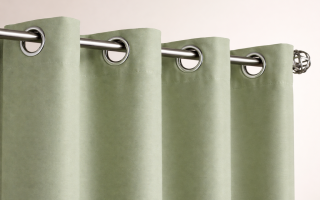
- Heading style: eyelet/grommet (casual), pinch pleat (tailored), wave track (contemporary ripple).
- Hardware: rod vs. track; match finishes to existing metals.
- Measure: confirm width (fullness 1.5×–2×), height (hang high), return (wrap to wall to block light gaps).
FAQs
Q: Are taupe and greige the same?
A: Close cousins—taupe leans brown-gray and reads warmer; greige is gray-beige and can feel a touch cooler.
Q: What curtains suit a north-facing room?
A: Use lighter fabrics and warm undertones (cream, warm beige, light taupe) to counter cool daylight.
Q: Do I need blackout in the living room?
A: Not always. Try double-layering: sheers for day, lined curtains for TV nights and winter insulation.
Whether you favor hushed minimalism or a sharper, contrast-forward look, taupe and white give you a fail-safe canvas. Choose curtains that support how you live—light, privacy, energy savings—and layer textures so the room feels collected, not crowded. Ready to update your space? Explore a wide range of neutral sheers, textured linens, and tailored blackout panels to build your perfect white-and-taupe story.