Easy Methods That Really Work
Introduction – Wrinkles Be Gone: Your Curtains Deserve a Smooth Glow
Wrinkled curtains can make a room feel less polished, even when the rest of the décor is beautifully styled. The good news is that smoothing them does not always require heavy ironing or complicated care.
Whether your curtains are newly unpacked, freshly washed, or have been stored away for a while, a few simple methods can help them fall beautifully again. In this guide, we share easy, fabric-friendly ways to remove wrinkles from curtains, along with practical tips to help prevent creases from coming back.

Why Do Curtains Get Wrinkled, Anyway?
The Hidden Culprits
Understanding why curtains wrinkle makes it much easier to choose the right solution. Most creases come from packaging, washing, storage, or changes in humidity.
Packaging & Shipping: The Factory Fold Curse
New curtains are usually folded tightly for shipping. After days or weeks in packaging, the fabric may hold visible fold lines once unpacked. This is normal, especially for heavier curtains or natural fabrics.
Improper Washing & Drying: A Common Mistake
Washing curtains in water that is too hot, spinning them too strongly, or drying them with high heat can cause fibers to contract and wrinkles to set. For best results, always follow the care label and use gentle settings whenever possible.
Storage Woes: Cramped Spaces = Stubborn Creases
Curtains stored in tight plastic bags, crowded closets, or compressed piles are more likely to develop deep creases. Fabric needs space to breathe. If you need to store curtains, fold them loosely or keep them in a breathable fabric bag.
Humidity & Gravity: The Silent Wrinkle Makers
Humidity can make fabric fibers absorb moisture and lose their smooth structure, especially in bathrooms, kitchens, or humid climates. Gravity can also pull heavier curtains downward, sometimes creating creases near the hem. With the right care, these wrinkles are usually easy to refresh.
First Things First: Check Your Curtain Fabric
Avoid Costly Mistakes!
Before using steam, heat, or sprays, always check the fabric type and care label. Different materials react differently to moisture and temperature. When in doubt, test the method on a small hidden area first.
Fabric Guide: Which Methods Work for Which Material?
Here is a simple guide to help you choose the safest wrinkle-removal method for your curtain fabric.
Cotton & Linen: Sturdy but Wrinkle-Prone
Cotton and linen are breathable, natural-looking, and beautiful, but they wrinkle more easily than synthetic fabrics. They usually respond well to steam, gentle ironing with a protective cloth, or hanging while slightly damp. Avoid very high heat, especially on linen, as it may scorch or become shiny.
Polyester & Blends: Low-Maintenance & Wrinkle-Resistant
Polyester and blended fabrics are generally easier to care for. A light steam or a quick refresh while hanging is often enough. Avoid high heat, as synthetic fibers can melt or become damaged. If ironing is necessary, use the lowest suitable temperature and never press directly for too long.
Silk & Satin: Delicate & Needing Gentle Care
Silk and satin require extra care. High heat, too much moisture, or direct ironing can affect their sheen and texture. Use gentle steam from a distance, or let bathroom steam soften light wrinkles. If ironing is absolutely necessary, use a protective cloth and the lowest setting.
Velvet & Heavy Fabrics: Steaming Is Your Best Bet
Velvet, chenille, and heavier textured fabrics should not be pressed flat with an iron, as this can crush the pile or change the texture. Hang the curtain and use a handheld steamer from a safe distance, moving slowly from top to bottom.
Blackout & Thermal Curtains: Extra Care Required
Blackout and thermal curtains often contain special linings that can be sensitive to high heat. Avoid direct ironing. Gentle steaming from a distance or a bathroom steam refresh is usually the safest option.
7 Easy Methods to Get Wrinkles Out of Curtains
No Expert Skills Needed
Choose the method that best suits your fabric, tools, and schedule. Always start with the gentlest option first.
Method 1: Steam While Hanging
The Easiest, Most Effective Trick
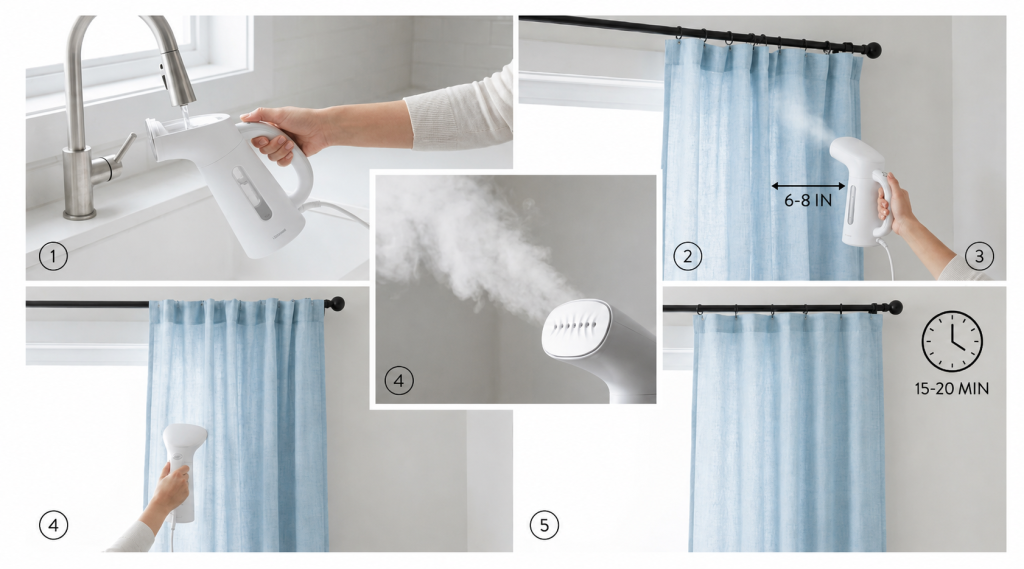
Steaming curtains while they hang is one of the easiest ways to relax wrinkles. It works well for most fabrics and allows the curtain to fall naturally as the fibers soften.
Using a Handheld Garment Steamer
Step-by-Step
Fill the steamer with clean water.
Hang the curtains evenly on the rod or track.
Hold the steamer about 6–8 inches away from the fabric.
Move slowly from top to bottom.
Let the curtains air dry completely before touching or adjusting them.
Pro tip: For deeper wrinkles, gently hold the fabric taut while steaming, without pulling too hard.
DIY Shower Steam Hack
No Steamer? No Problem!
This method works well for light to medium wrinkles.
Hang the curtains in the bathroom.
Run a hot shower for 10–15 minutes with the door closed.
Let the steam soften the fabric for another 20–30 minutes.
Allow the curtains to air dry fully before rehanging them in the room.
Method 2: Damp Cloth + Iron
For Deep, Stubborn Wrinkles
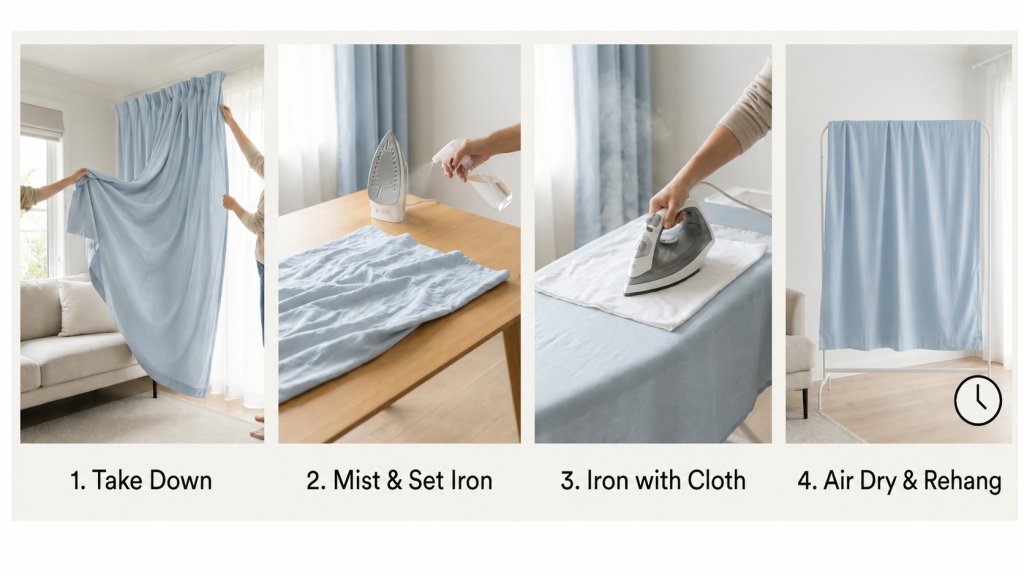
This method is best for cotton, linen, and some durable blends. It is not recommended for velvet, silk, blackout, or thermal-lined curtains.
Take the curtains down and lay them flat.
Place a clean damp cloth over the wrinkled area.
Set the iron to the correct temperature for the fabric.
Press gently over the cloth, moving slowly.
Let the curtains dry fully before rehanging.
Pro tip: Never place the iron directly on the fabric unless the care label clearly allows it.
Method 3: Tumble Dry with a Damp Towel
Quick Fix for Light Wrinkles
This is a convenient option for washable curtains and light creases.
Place the curtains in the dryer with a clean damp towel.
Use a low-heat or air-fluff setting.
Run for 10–15 minutes.
Remove the curtains immediately and hang them while still warm.
Ice Cube Alternative
No Damp Towel? Try This!
For some machine-safe fabrics, you can place 2–3 ice cubes in the dryer with the curtains and use a low-heat setting for about 10 minutes. As the ice melts, it creates light steam that helps relax wrinkles.
Method 4: Spray & Let Dry
Zero Effort, Perfect for Busy Days
This method is ideal for light wrinkles on hanging curtains.
Fill a spray bottle with clean water.
Lightly mist the wrinkled areas.
Smooth the fabric gently by hand.
Let the curtains air dry naturally.
Avoid soaking the fabric, as too much water may leave marks on delicate materials.

Method 5: Hang While Damp
Prevent Wrinkles Before They Start
One of the best ways to avoid wrinkles after washing is to hang curtains while they are still slightly damp.
Wash according to the care label.
Remove them before they are completely dry.
Hang them evenly on the rod or track.
Smooth the fabric by hand from top to bottom.
Let them dry naturally in place.
This helps the fabric settle into a smooth, natural drape.
Method 6: Wrinkle-Release Spray
Store-Bought or DIY
Wrinkle-release sprays can be useful for quick touch-ups, especially on easy-care fabrics. Always test first on a hidden area.
DIY Wrinkle-Release Spray
Mix:
1 cup water
1 tablespoon fabric softener
1 tablespoon white vinegar
Shake well before use.
Use:
Hang the curtains.
Lightly spray the wrinkled areas.
Smooth the fabric with your hands.
Let air dry.
Do not use this method on delicate fabrics unless you are sure the fabric is suitable.
Method 7: Professional Dry Cleaning
For Delicate or Expensive Curtains
For silk, satin, lined curtains, or high-value custom curtains, professional cleaning is often the safest choice. A professional cleaner can help remove stubborn wrinkles without exposing the fabric to unsuitable heat or moisture.
Pro Tips to Keep Curtains Wrinkle-Free
Long-Term Solutions
Follow the care label carefully.
Hang curtains evenly on a straight, level rod or track.
Avoid overcrowding the curtain panels.
Store curtains loosely in a breathable bag.
Use bottom hem weights if you want a straighter fall.
Dust curtains regularly to keep the fabric fresh and light.
Avoid prolonged direct sunlight, especially for delicate or natural fabrics.
Expert Insights: What Interior Designers Recommend
Interior designers often recommend steaming as the safest everyday solution for refreshing curtains. It allows the fabric to relax without flattening the texture or stressing the fibers.
For natural fabrics such as linen and cotton, light steam can restore a soft, elegant drape. For velvet, blackout, thermal, or delicate curtains, indirect steam is usually safer than ironing.
The key is simple: use less heat, more patience, and always respect the fabric.
Common Mistakes to Avoid
Don’t Ruin Your Curtains!
Using high heat on delicate or lined curtains.
Ironing velvet or textured fabrics directly.
Over-drying curtains after washing.
Soaking the fabric instead of lightly misting.
Skipping the care label.
Not testing on a hidden area first.
Folding curtains too tightly for long-term storage.
Conclusion – Enjoy Smooth, Wrinkle-Free Curtains Today
Wrinkles are common, but they are usually easy to fix with the right method. Start by identifying your curtain fabric, then choose the gentlest care option that suits it.
A handheld steamer, a light mist of water, or simply hanging curtains while slightly damp can make a noticeable difference. With a little care, your curtains will keep their natural flow, soft texture, and polished look for longer.
Looking for curtains that combine beauty, comfort, and made-to-measure elegance? Explore our custom curtain collection and create a window finish that feels perfectly at home.

FAQs: Your Curtain Wrinkle Questions Answered
Q1: Can I use a hair dryer?
A: A cool or low setting may help with very light wrinkles, but it is not the most effective method. Steam or a light mist of water usually works better and is safer for most fabrics.
Q2: How often should I remove wrinkles from curtains?
A: You can refresh curtains whenever they start to look creased. For daily care, a light steam every few weeks is usually enough. After washing, remove wrinkles as soon as possible.
Q3: Will wrinkles come back?
A: Yes, wrinkles may return if curtains are stored tightly, washed incorrectly, or exposed to humidity. Hanging them evenly and storing them loosely helps prevent creases.
Q4: Can I use wrinkle-release spray on blackout curtains?
A: You can use a gentle fabric-safe spray, but always test a small hidden area first. Avoid soaking blackout curtains, especially if they have a special lining.
Q5: What should I do with dry-clean-only curtains?
A: For light wrinkles, use gentle steam from a distance. For deep wrinkles or delicate materials, professional dry cleaning is the safest option.